EPFL’s Kevin Sivula Team Uses One Organic Semiconductor Blend for a Solar Water-Splitting Sheet

 Nicolas J. Diercks
At a glance
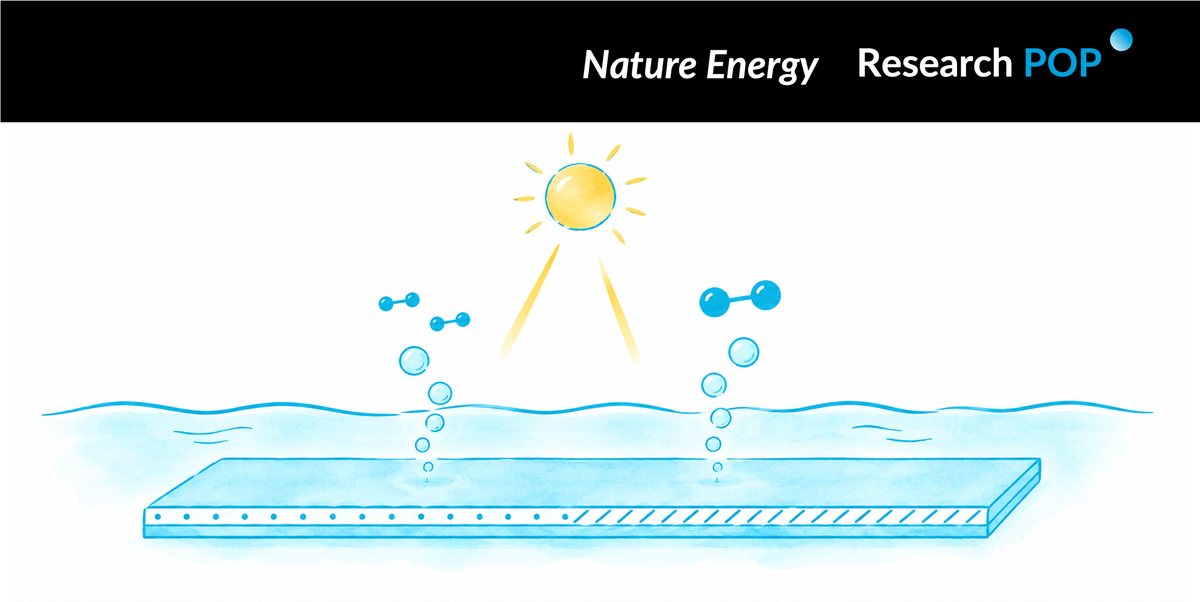
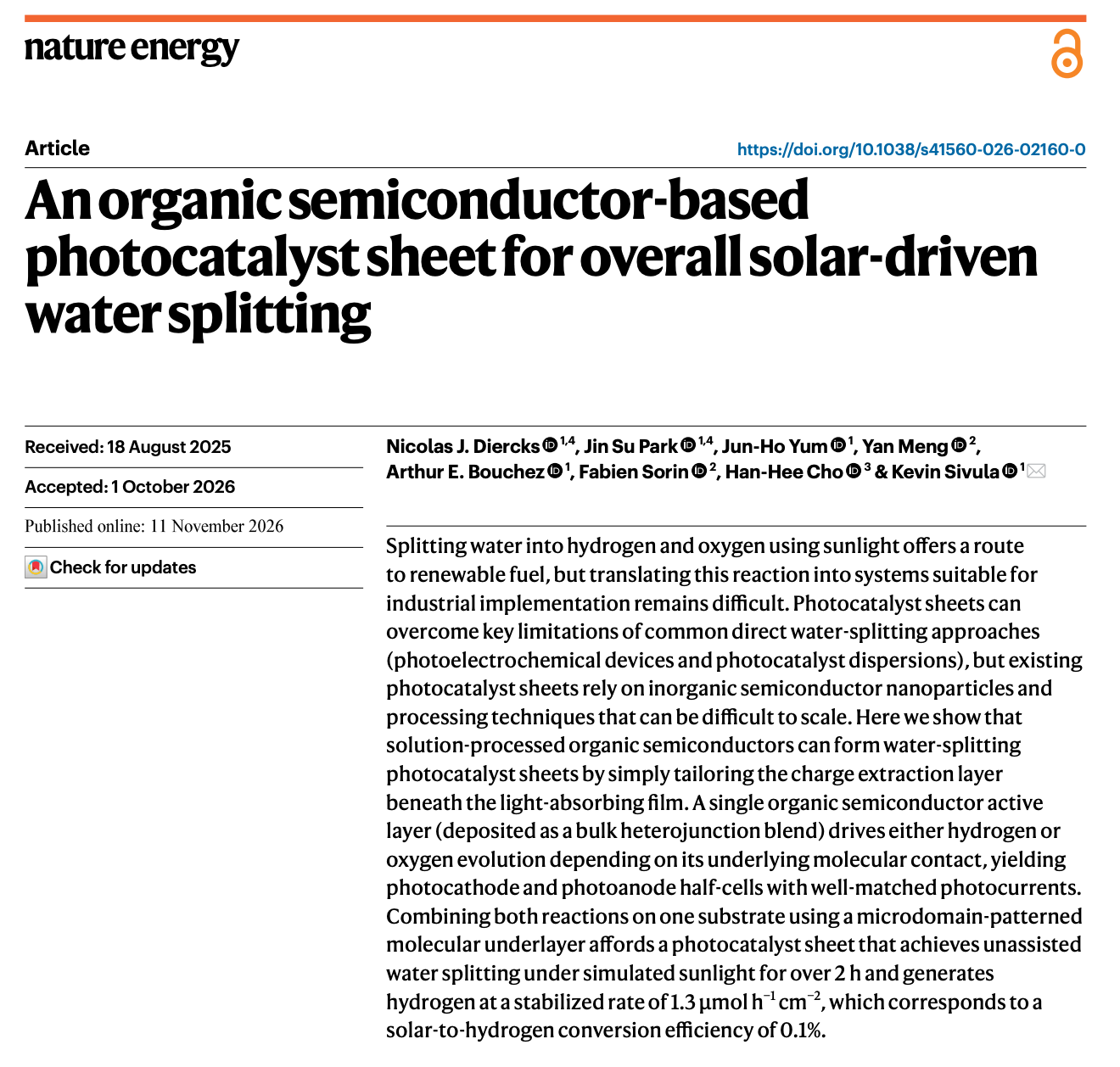
Researchers in Kevin Sivula’s team at EPFL have developed a photocatalyst sheet that uses the same organic semiconductor blend for hydrogen and oxygen evolution. Two molecular contacts beneath the light-absorbing film determine which reaction occurs in each region.
The shared absorber is a bulk heterojunction of PBDTTTPD and PNDIHDT. A 2PACz underlayer configures it for hydrogen evolution, while NI-PA configures it for oxygen evolution. Patterning these contacts on one conductive substrate brings the two functions together.
Under simulated sunlight and without an applied bias, the sheet operated for more than two hours. It reached a stabilized hydrogen-production rate of 1.3 µmol h⁻¹ cm⁻², produced hydrogen and oxygen in a 2:1 ratio and achieved a solar-to-hydrogen efficiency of 0.1%.
Background
Overall water splitting requires two coupled reactions: proton reduction to hydrogen and water oxidation to oxygen. A light-driven system must separate photogenerated electrons and holes and deliver them to the appropriate reaction sites.
Many systems assign these tasks to different absorbers or separate photoelectrodes. A photocatalyst sheet instead places hydrogen- and oxygen-evolving regions on a shared conductive support. The support transfers charge between the regions, allowing the two reactions to operate without an external wire connecting separate electrodes.
Organic semiconductors offer a solution-processable platform for this architecture. Blending an electron-donating polymer with an electron-accepting polymer creates a bulk heterojunction, or BHJ, that supports charge separation. Molecular contacts between the absorber and its substrate can then control which charges are extracted.
The researchers used this interfacial control to give the same organic blend two complementary functions.
Research question
Can changing the molecular contact beneath an organic BHJ switch it between hydrogen- and oxygen-evolving operation? Can the two contact types then be patterned on one substrate to achieve unassisted overall water splitting?
Inside the study
Moving from separate photoelectrodes to an integrated sheet
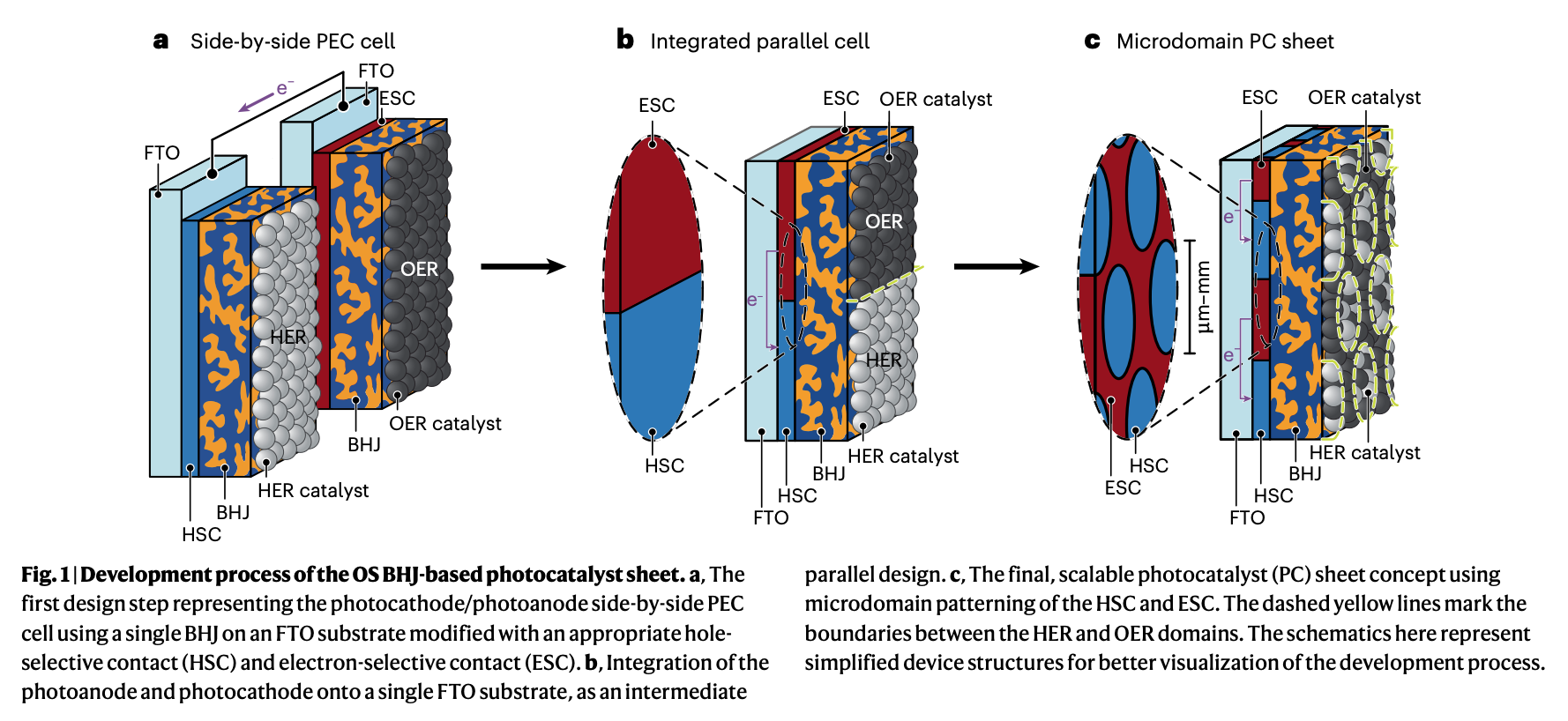
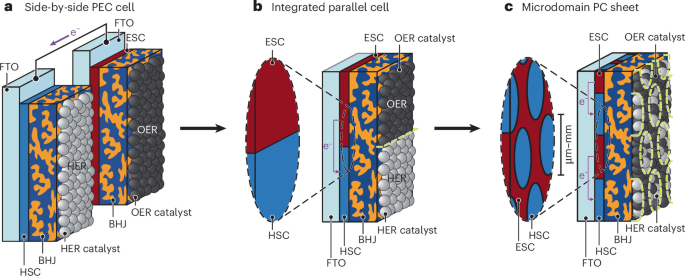
Figure 1 introduces the progression of device architectures. The researchers first examine separate photoelectrochemical half-cells, then combine the two functions in a parallel arrangement on one fluorine-doped tin oxide, or FTO, substrate.
The final architecture divides the surface into microdomains for hydrogen and oxygen evolution. These regions share the conductive FTO support, which transfers charge between them.
This sequence connects the operation of the individual photoelectrodes with the behaviour of the integrated sheet.
Molecular contacts select the role of the absorber
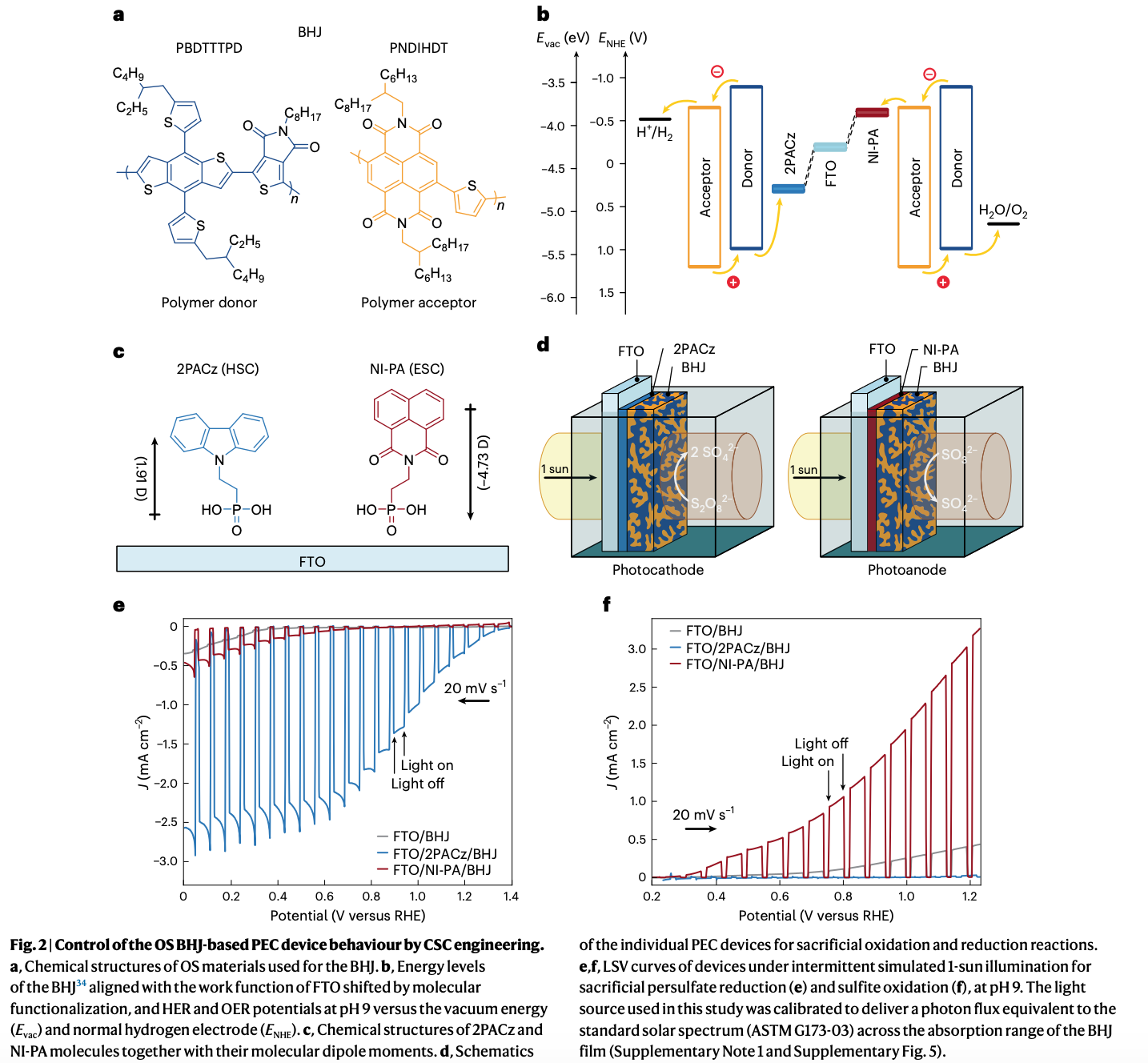
Figure 2 presents the common light-absorbing layer: the polymer donor PBDTTTPD blended with the polymer acceptor PNDIHDT. The donor–acceptor combination supports photogenerated charge separation.
The two electrode configurations differ in the molecular layer between FTO and the BHJ. The 2PACz and NI-PA contacts introduce different interfacial dipoles and charge selectivity. With 2PACz, the film operates on the hydrogen-evolution side; with NI-PA, it operates on the oxygen-evolution side.
The absorber composition therefore remains the same while the underlying contact determines its electrochemical role.
Testing the complementary half-reactions
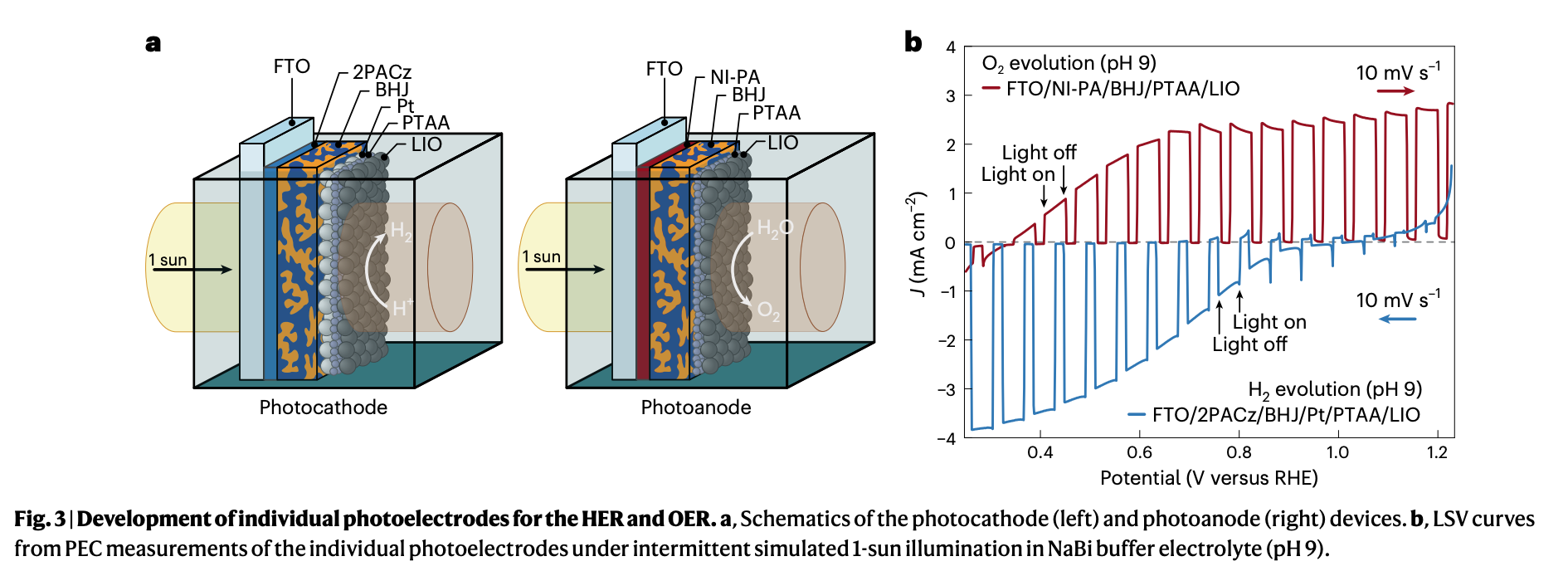
Figure 3 examines the two photoelectrodes separately with their corresponding catalytic components. The 2PACz-based structure functions as a photocathode for hydrogen evolution, while the NI-PA-based structure functions as a photoanode for oxygen evolution.
These measurements establish that both configurations operate experimentally and have photoresponses compatible with pairing. They provide the basis for combining the two branches into an overall water-splitting system.
Patterning both functions beneath one organic coating
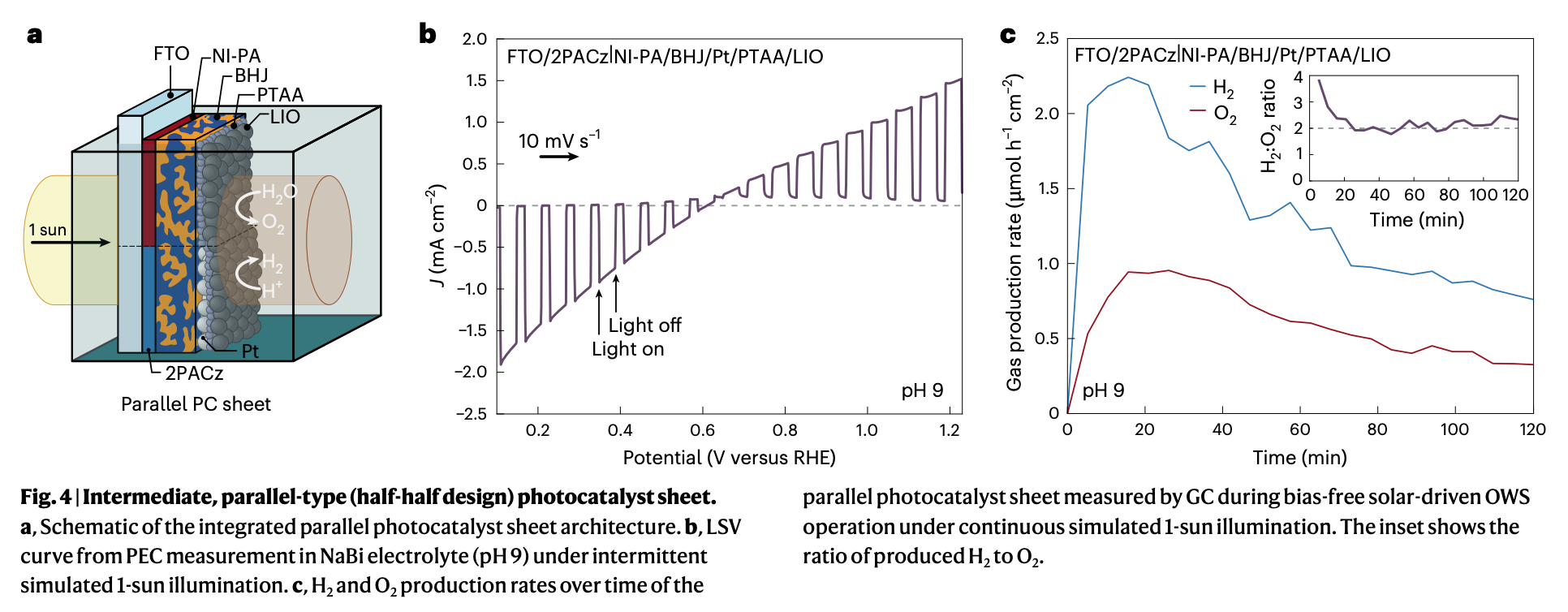
Figure 4 shows how the molecular contacts are spatially patterned on a single FTO substrate. The common BHJ is deposited over the patterned surface, creating regions with different charge-extraction behaviour beneath the same absorber chemistry.
The molecular underlayer defines the hydrogen- and oxygen-evolving domains. The conductive substrate connects them electrically, allowing charge transfer within the sheet.
This arrangement introduces the functional pattern at the buried interface rather than through separate light-absorbing materials.
Examining the effect of domain size
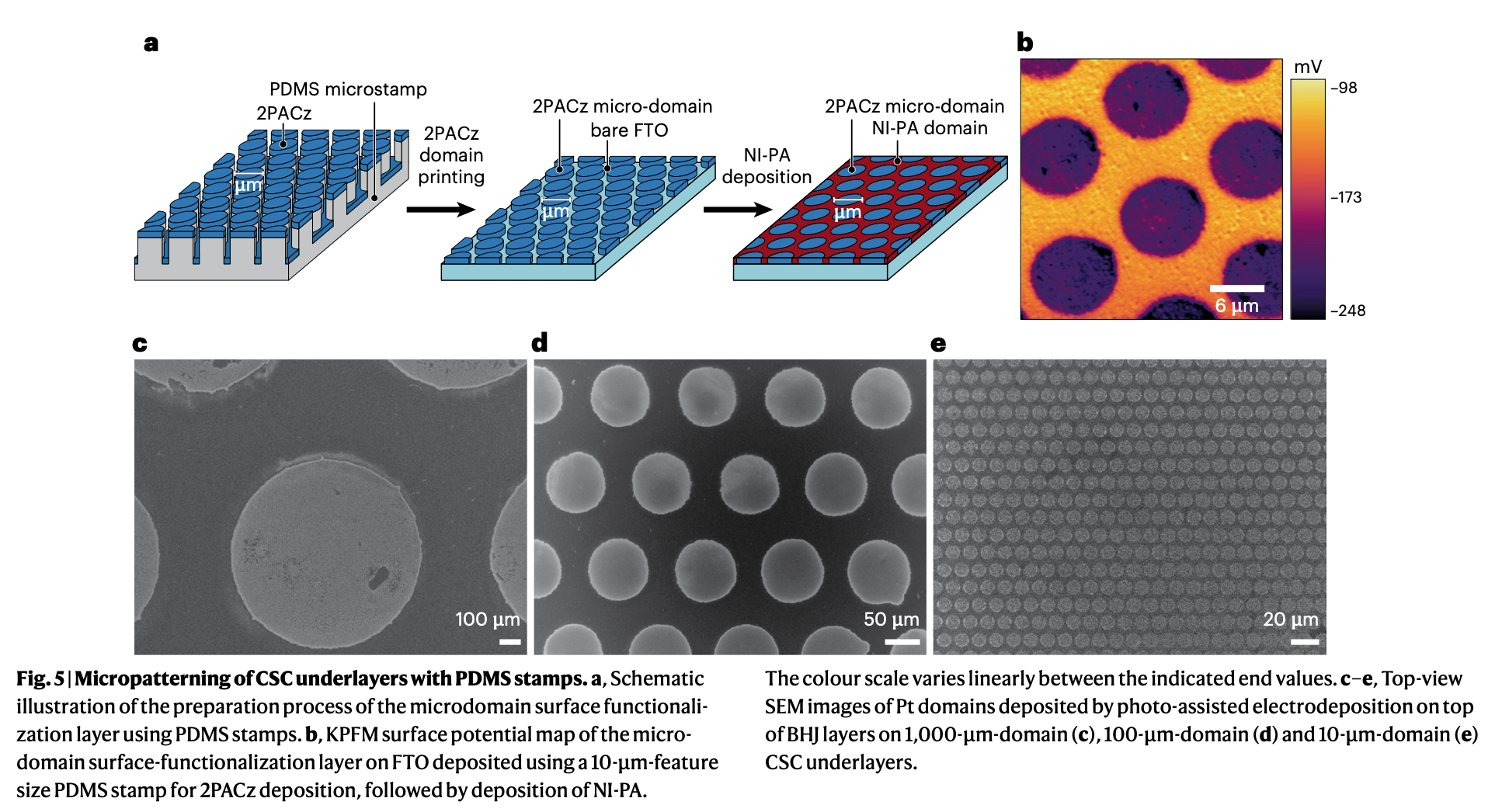
Figure 5 compares devices with different microdomain dimensions. Smaller domains reduced performance in the reported experiments.
The results show that domain size affects the operation of the integrated structure. Changing the dimensions also changes the arrangement of boundaries and the paths available for charge extraction and transfer.
The patterning study therefore connects molecular contact selection with the geometry of the completed device.
Measuring overall water splitting
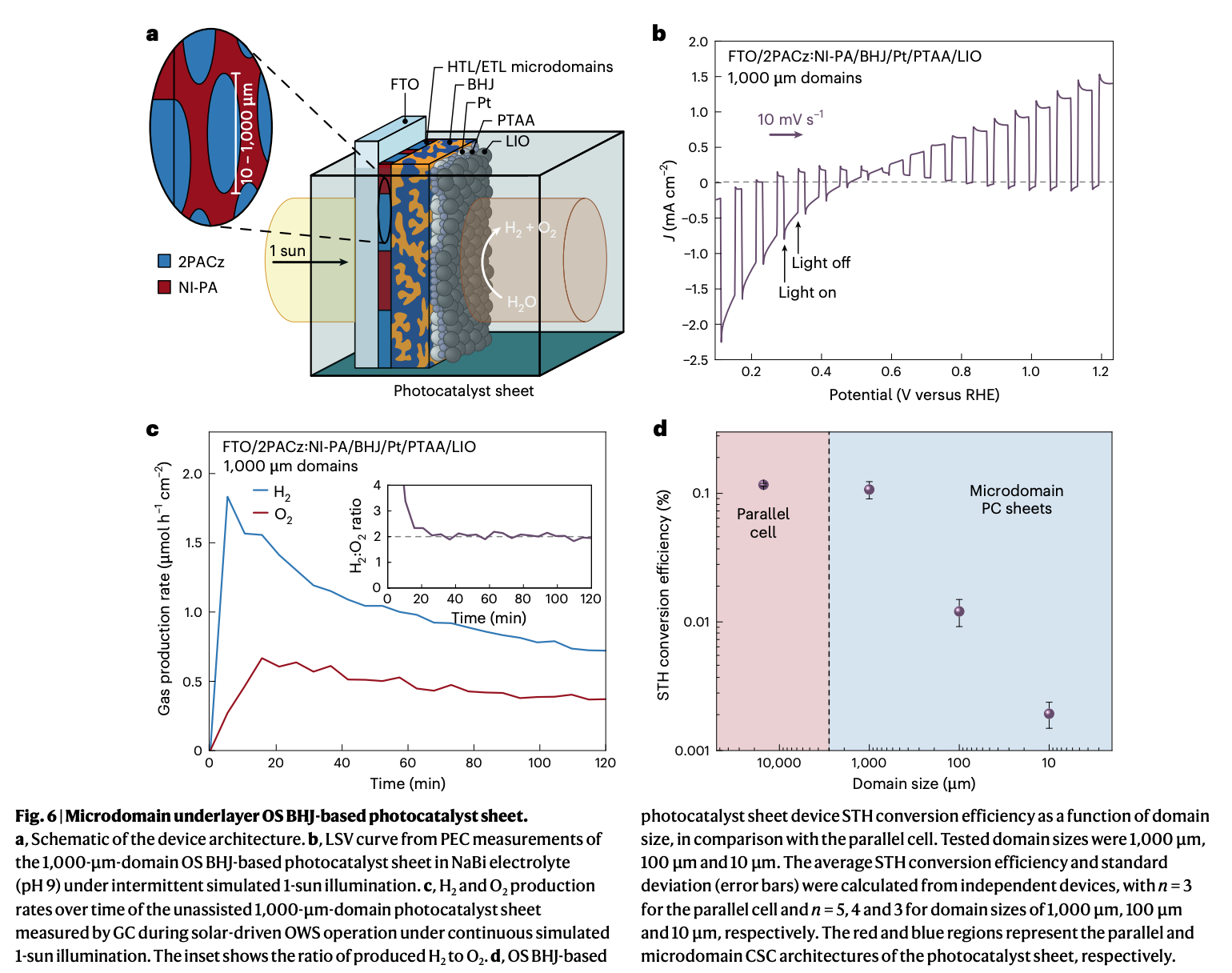
Figure 6 presents the integrated sheet’s gas-production performance under simulated sunlight. Without an applied bias, the device sustained operation for more than two hours and reached a stabilized hydrogen-production rate of 1.3 µmol h⁻¹ cm⁻².
Hydrogen and oxygen evolved in a 2:1 ratio, consistent with overall water splitting. The reported solar-to-hydrogen efficiency was 0.1%.
The study also demonstrates spray patterning of the molecular underlayer. This extends the fabrication approach beyond contact-based patterning while retaining the same principle of assigning different functions through the interface beneath the organic absorber.
Summary and outlook
The study connects molecular interface engineering with the construction of an integrated organic photocatalyst sheet. The PBDTTTPD:PNDIHDT blend supports hydrogen or oxygen evolution depending on whether it is deposited over 2PACz or NI-PA.
Patterning these contacts on a shared FTO substrate combines the two functions without an external connection between separate photoelectrodes. The resulting sheet demonstrates unassisted solar water splitting, stoichiometric hydrogen and oxygen production, and a solar-to-hydrogen efficiency of 0.1%. The domain-size comparison and spray-patterning experiment further examine how the molecular design translates into device fabrication.
About the researchers
Nicolas J. Diercks and Jin Su Park of EPFL are co-first authors. Kevin Sivula of EPFL is the corresponding author.
Jun-Ho Yum, Yan Meng, Arthur E. Bouchez and Fabien Sorin are also affiliated with EPFL. Han-Hee Cho is affiliated with Ulsan National Institute of Science and Technology.
Original research
Nicolas J. Diercks; Jin Su Park; Jun-Ho Yum; Yan Meng; Arthur E. Bouchez; Fabien Sorin; Han-Hee Cho; Kevin Sivula. “An organic semiconductor-based photocatalyst sheet for overall solar-driven water splitting.” Nature Energy. Published 11 November 2026.
Research POP Notes
This article reflects the independent interpretation of the Research POP team and does not represent the views of the authors, their institutions or the journal. If you identify any inaccuracies or have concerns regarding the content, figures or attribution, please contact us at team.researchpop@gmail.com. We will review the matter promptly and make corrections or remove the relevant material where appropriate.