ETH Zurich and NCCR Catalysis researchers map local environments in single-atom catalysts

At a glance
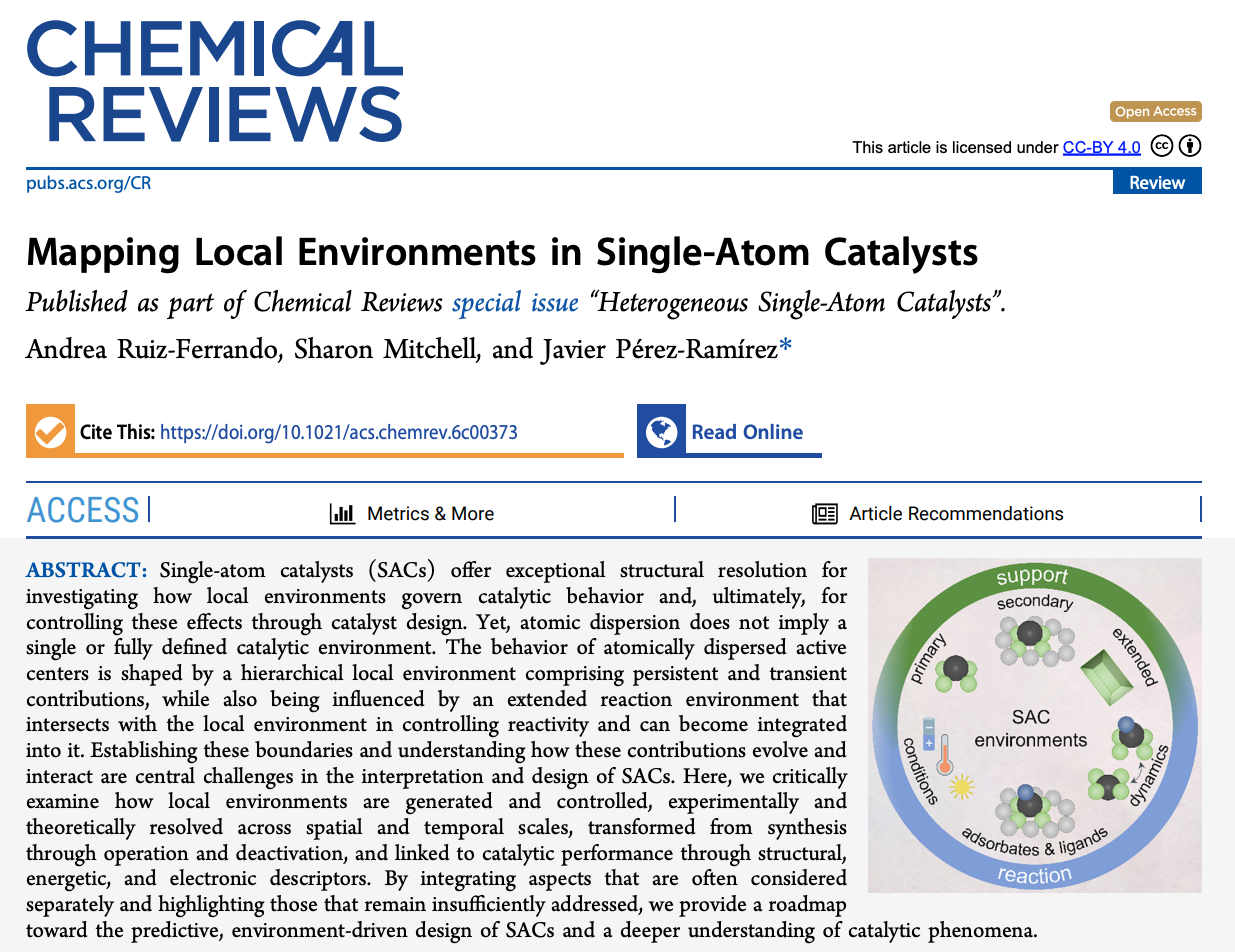
An isolated metal atom does not automatically represent a single, uniform catalytic site. In a Chemical Reviews article, Andrea Ruiz-Ferrando, Sharon Mitchell and Javier Pérez-Ramírez describe single-atom catalysts as populations of local environments shaped by synthesis, activation, reaction, deactivation and regeneration.
Their framework distinguishes three connected levels. The primary environment contains atoms directly bonded to the metal. The secondary environment includes nearby, site-specific influences without direct coordination. The extended environment encompasses broader support and interface properties. Together, these levels connect the immediate chemistry of an isolated atom with the material and reaction conditions surrounding it.
The review follows these environments from their formation and characterization to their evolution and catalytic function. Its central proposal is to map the distribution of sites, including minority and transient states, and determine how their contributions change during operation.
Background
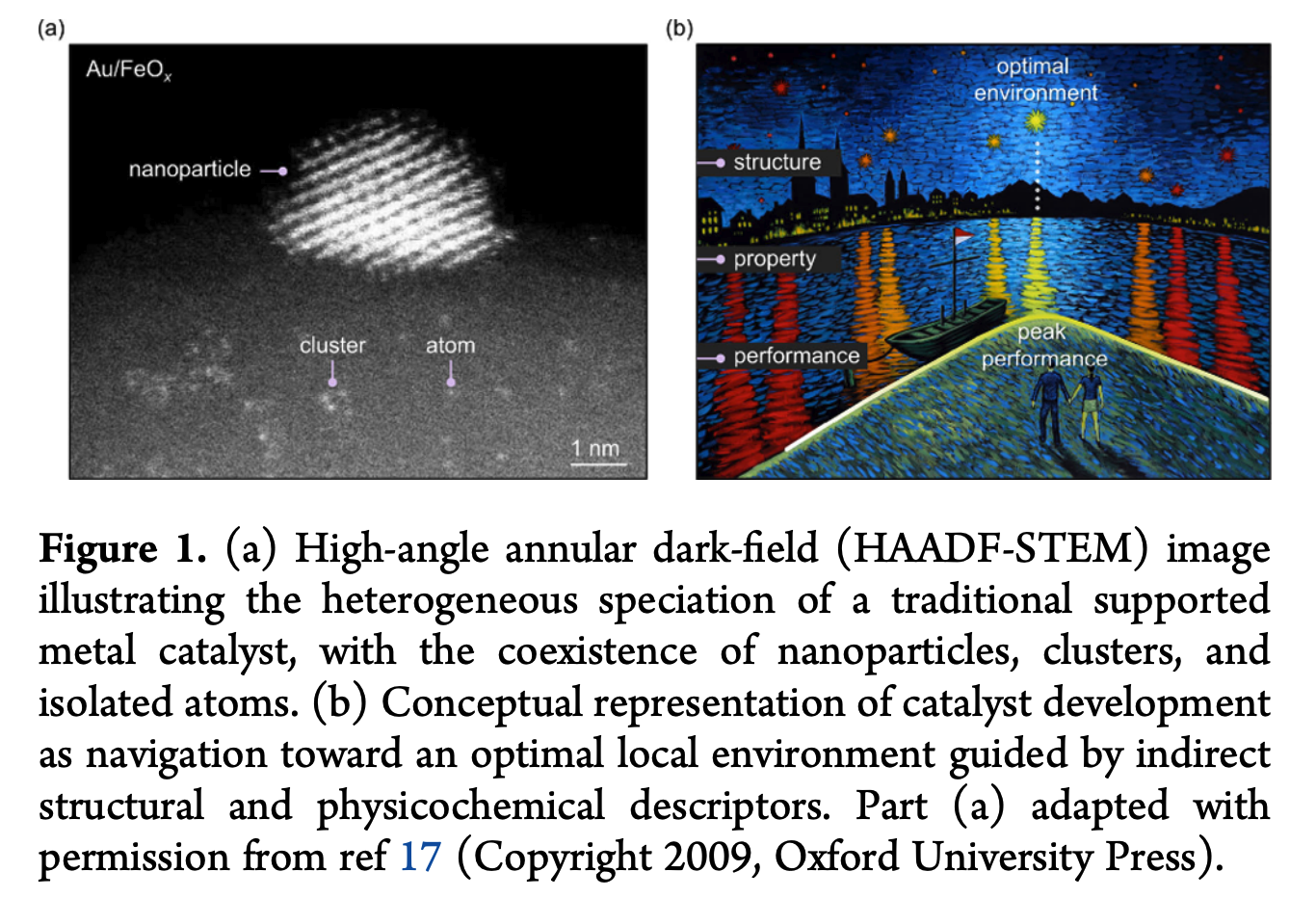
Single-atom catalysts contain isolated metal atoms stabilized on a solid support. This arrangement can increase metal utilization and provide opportunities to adjust reactivity through coordination chemistry. Yet two atoms of the same metal can behave differently even when both are atomically dispersed within one sample.
One may occupy a lattice position, another a vacancy, and another a site surrounded by hydroxyl groups or residual precursor ligands. These arrangements influence the metal’s electronic structure, its accessibility to reactants and the intermediates it can stabilize. Atomic dispersion therefore establishes an important structural feature, but identifying the catalytic environment requires a fuller description.
The support also contributes to the reaction. It may supply oxygen, exchange charge with the metal, organize solvent molecules or create neighbouring adsorption sites. Electrode potential can reorganize an electrochemical interface, while illumination generates carriers whose transport and trapping influence photocatalytic reactions. These effects connect the metal’s immediate coordination to processes extending through the surrounding material.
Characterization must contend with this complexity. Microscopy can reveal isolated atoms in selected regions, while spectroscopy often averages over larger populations. A dominant signal may conceal a less abundant environment that contributes disproportionately to activity. The review brings these challenges together by treating catalysts as evolving populations whose structures and functions depend on preparation history and operating conditions.
Research question
How should the environment around an isolated metal atom be defined, measured and controlled? How can researchers distinguish direct coordination from nearby influences and broader support properties, then follow their evolution during reaction?
The authors also examine how this information can be translated into descriptors of activity, selectivity and stability. The review develops a common framework across catalyst families and thermal, electrochemical and photochemical reactions.
Inside the study
From atomic dispersion to distributions of environments
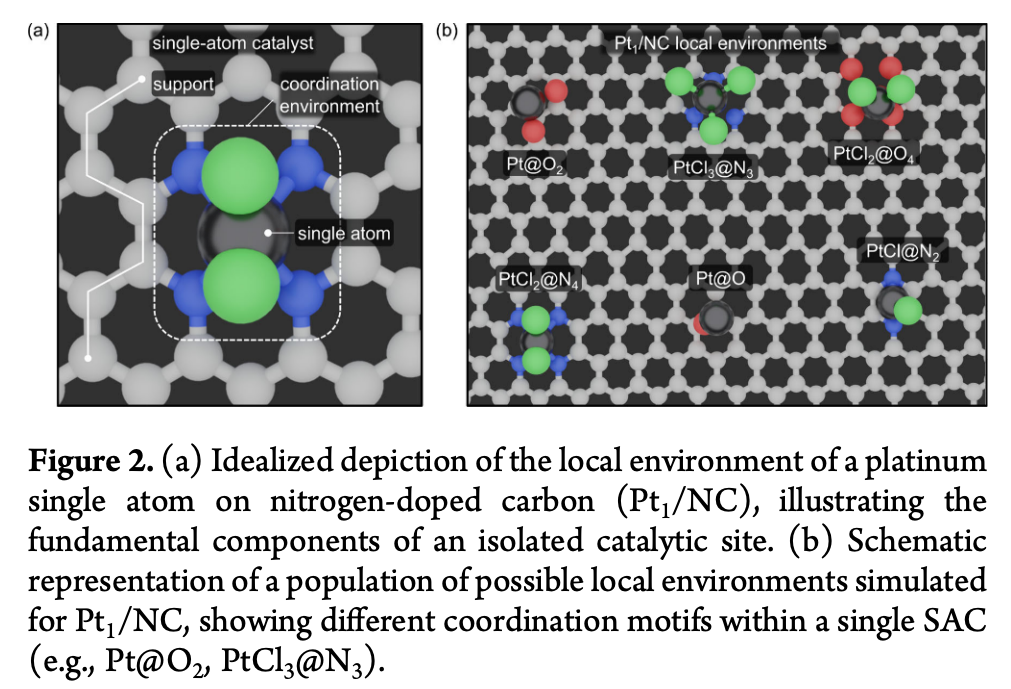
Figure 2 introduces the distinction that underpins the review. Panel a presents an idealized Pt₁/NC site, identifying the isolated atom, its coordination environment and the support. Panel b expands that picture into a population of possible Pt environments with different coordinating atoms and ligand arrangements.
The comparison shows why a single structural drawing cannot necessarily represent an entire catalyst. A material described as Pt₁/NC can contain several chemically distinct environments, even when the platinum remains atomically dispersed. Their relative populations depend on how the material was prepared and treated.
This changes the design question. Alongside identifying a promising coordination motif, researchers need to establish how much of that motif is present, which other environments coexist with it and how the population changes during use. The review consequently connects site identity with distributions and catalytic history.
Defining primary, secondary and extended environments
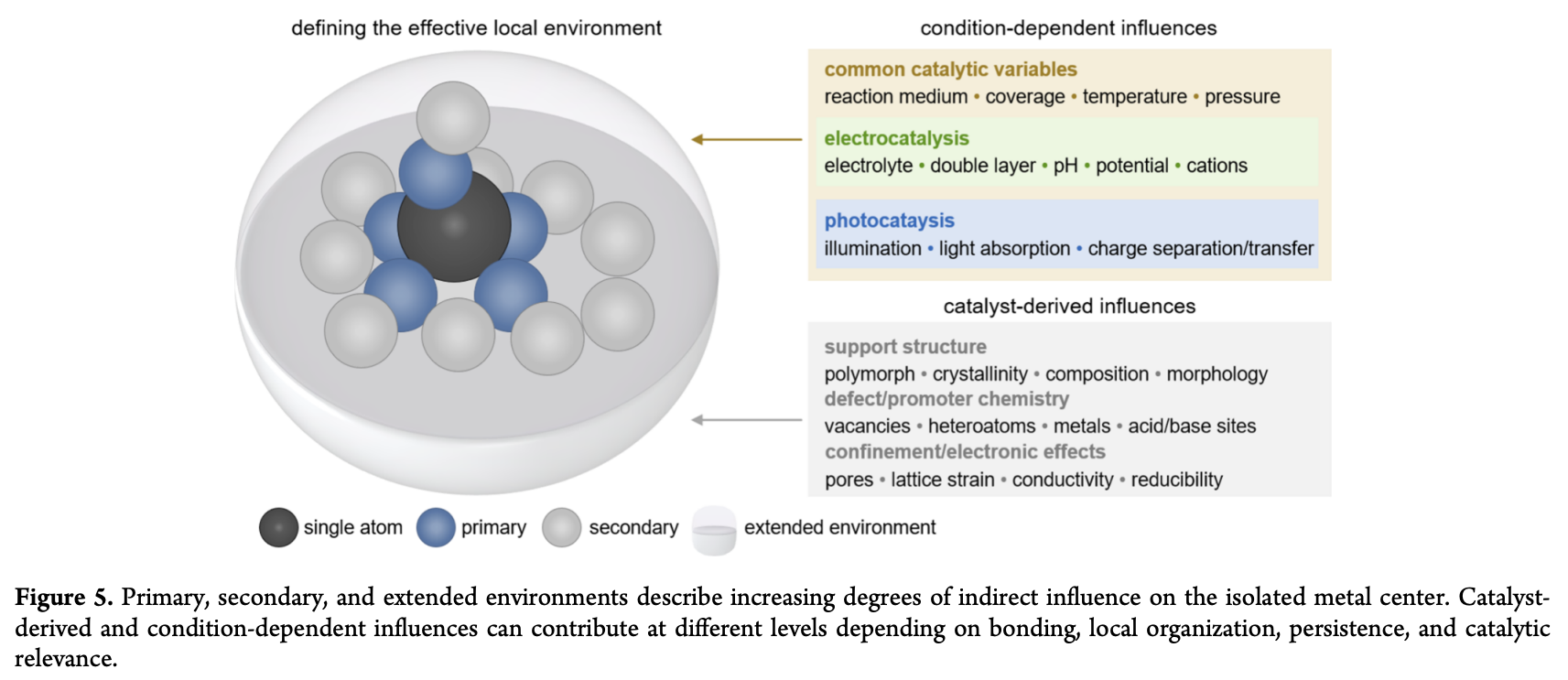
Figure 5 provides the review’s central organizational framework. It places the isolated metal within primary, secondary and extended environments, alongside the catalyst-derived and condition-dependent influences that shape them.
The primary environment comprises direct coordination: the atoms bonded to the metal and their arrangement. The secondary environment includes organized nearby features that influence the site without directly coordinating it, such as neighbouring defects, heteroatoms or interfacial species. The extended environment captures broader properties, including support morphology, porosity, conductivity and reducibility.
This also helps clarify that these levels are not fixed distance shells. Their boundaries depend on bonding, local organization, persistence and catalytic relevance. A solvent molecule directly coordinated to the metal has a different role from solvent organized nearby or acting through the broader interface.
Temperature, pressure, potential and illumination influence these environments by changing coverage, electronic states, coordination and interfacial organization. The same framework can therefore describe several catalytic regimes while preserving the different physical processes operating in each.
Resolving environments through experiment and theory
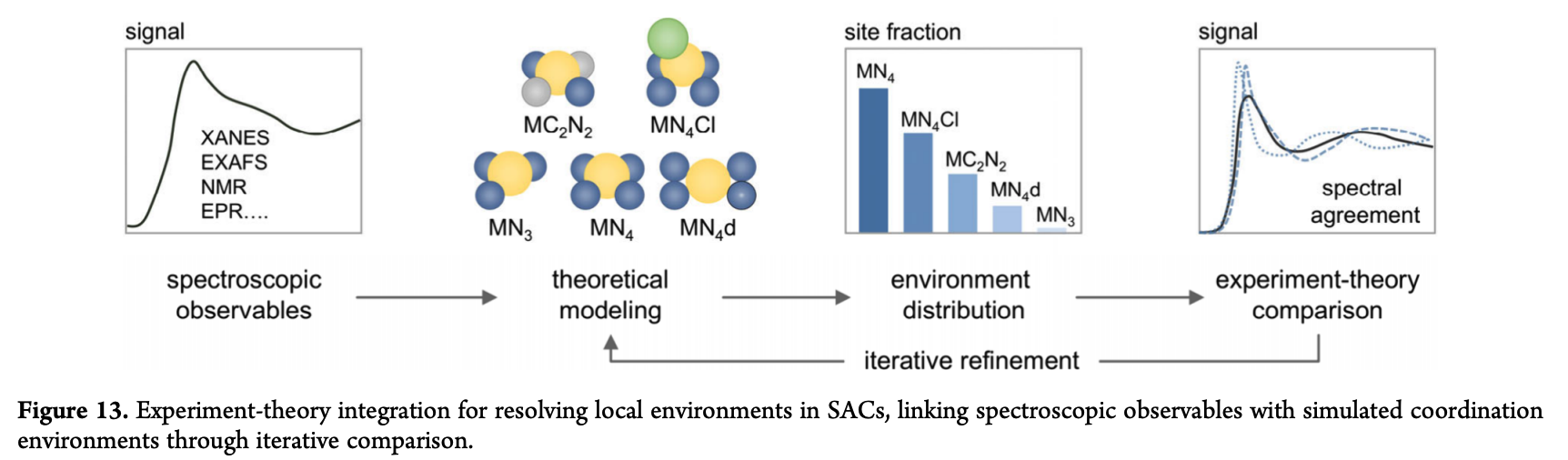
Figure 13 presents characterization as an iterative comparison between measurements and structural models. Spectroscopic observables inform candidate coordination environments; those candidates are assembled into possible distributions; simulated and measured responses are compared; and the models are refined.
The environment-distribution step is especially important. Agreement with a spectrum need not identify one unique structure. Several configurations may remain compatible with the evidence, and their combined contributions may explain the measurement better than any single idealized site.
The chapter places microscopy, X-ray absorption, photoelectron spectroscopy, EPR, NMR and other methods within this complementary approach. Each constrains different aspects of the environment. Microscopy provides spatial information, while spectroscopies probe coordination, electronic state or particular chemical species across the populations they sample.
Theory helps test the consistency of those assignments. Candidate structures can be evaluated against simulated spectra, energetics and catalytic behaviour. Figure 13 thus guides the reader toward a structural ensemble supported by several observations, with uncertainty retained where the evidence does not distinguish between alternatives.
Directing local environments through synthesis
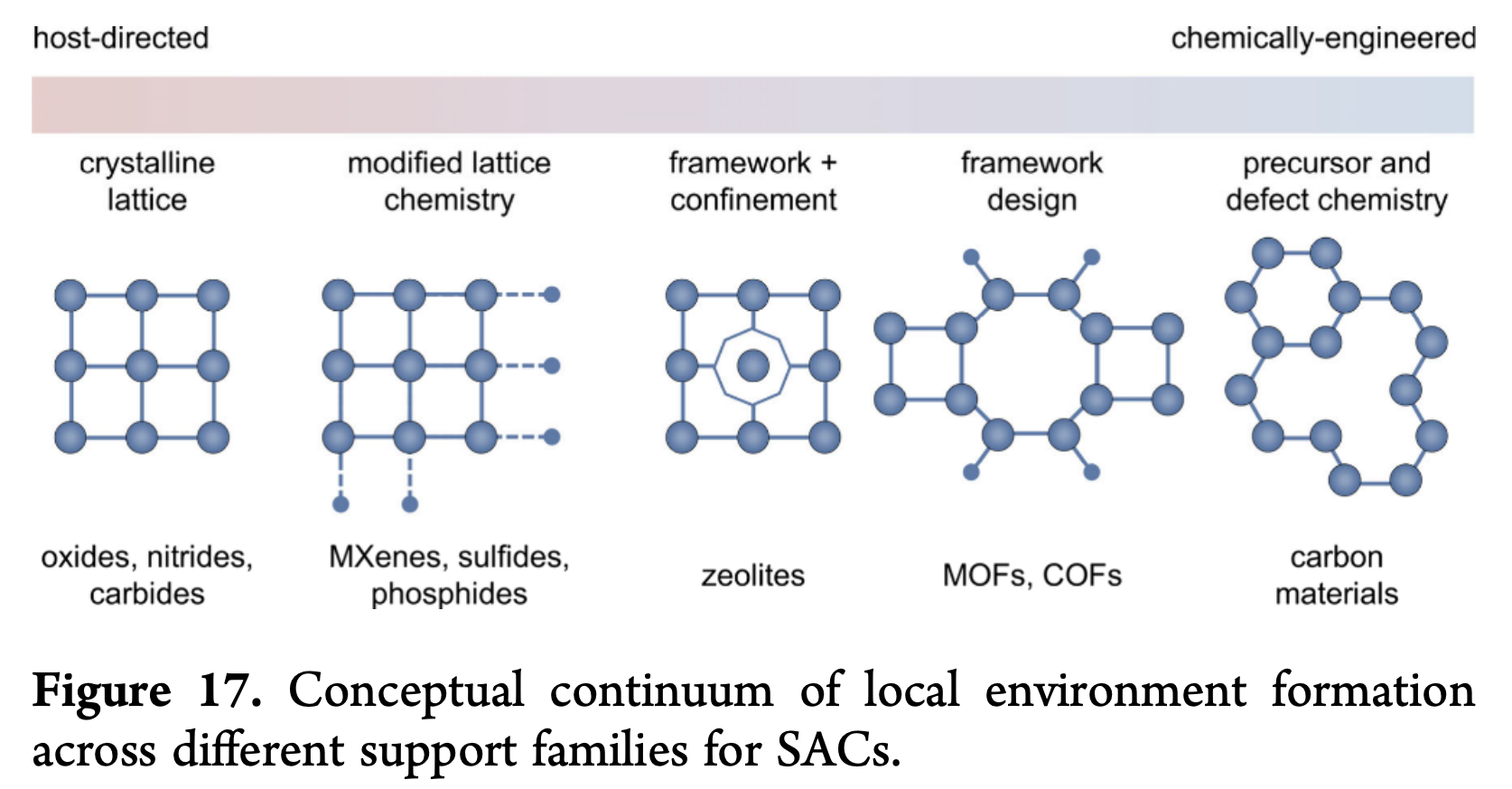
Figure 17 organizes support families along a conceptual continuum from host-directed to chemically engineered environment formation. Crystalline lattices, modified lattice chemistry, framework confinement, framework design, and precursor or defect chemistry provide different ways to establish an isolated atom’s surroundings.
At the host-directed end, lattice structure constrains the positions and coordination arrangements available to a metal. Moving across the figure, confinement and deliberately designed frameworks provide other forms of control. In carbon materials, precursor chemistry, heteroatom incorporation and defect formation become central to generating the accessible site population.
This continuum provides a basis for comparing materials that are often discussed separately. Oxides, nitrides, carbides, zeolites, metal–organic frameworks, covalent organic frameworks and carbon supports differ in how their local environments emerge and how much structural flexibility remains.
The metal-introduction method adds another layer. Wet chemistry, direct synthesis and vapor-phase deposition establish different interactions between precursors and supports. Subsequent activation can remove ligands, modify defects and reorganize coordination. The resulting environment therefore reflects both the host’s constraints and the pathway used to introduce and stabilize the metal.
Following environments under reaction conditions
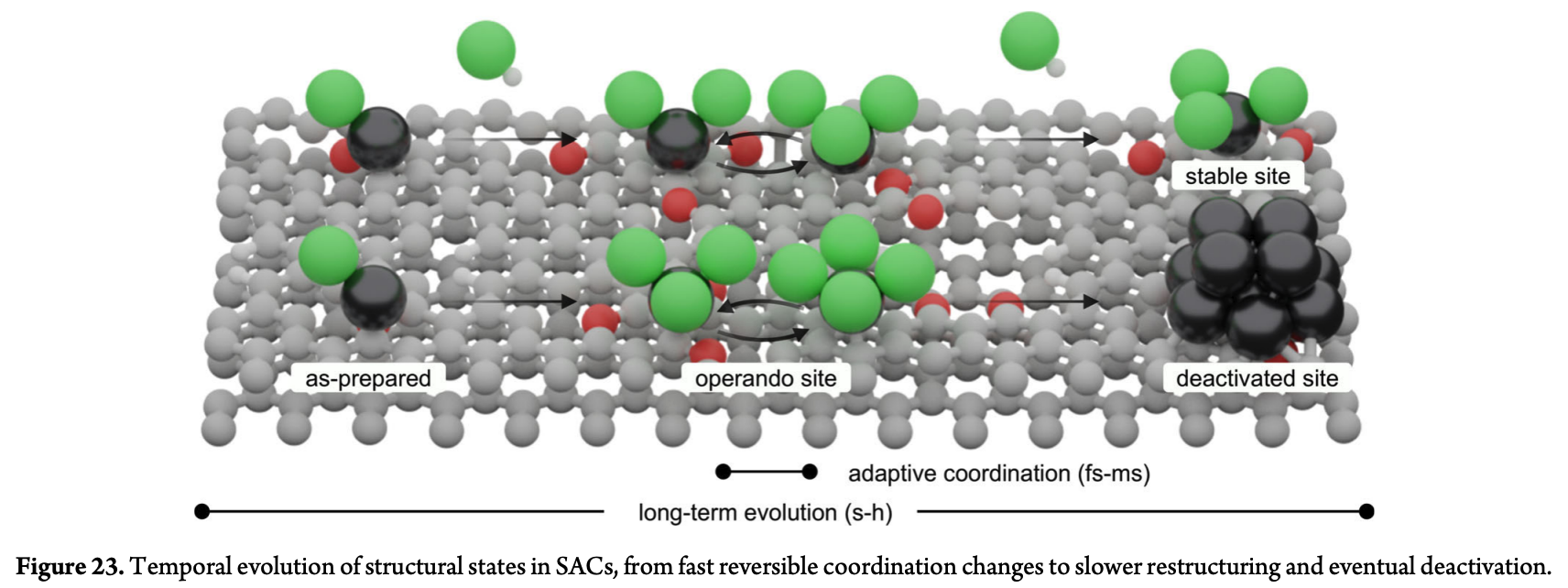
Figure 23 connects the as-prepared catalyst with its working and longer-term states. It distinguishes rapid adaptive coordination from slower structural evolution, showing how a catalyst can develop an operative environment and subsequently reach a stable or deactivated configuration.
This distinction helps interpret structural change. Coordination adjustments can be reversible components of catalytic turnover. More persistent changes can alter the identity, accessibility or population of sites through ligand exchange, migration, aggregation or support reconstruction.
A working-state structure must therefore be understood in relation to time and conditions. A site detected before reaction may evolve into another configuration, while an abundant species observed during operation may be a resting or spectator state rather than the configuration responsible for turnover.
The chapter also examines cooperation with support atoms and neighbouring metals. Such interactions expand the catalytic unit beyond one isolated centre. Figure 23 supplies the temporal framework for asking whether these relationships remain stable, adapt reversibly or change as the catalyst deactivates.
Connecting environments to catalytic performance
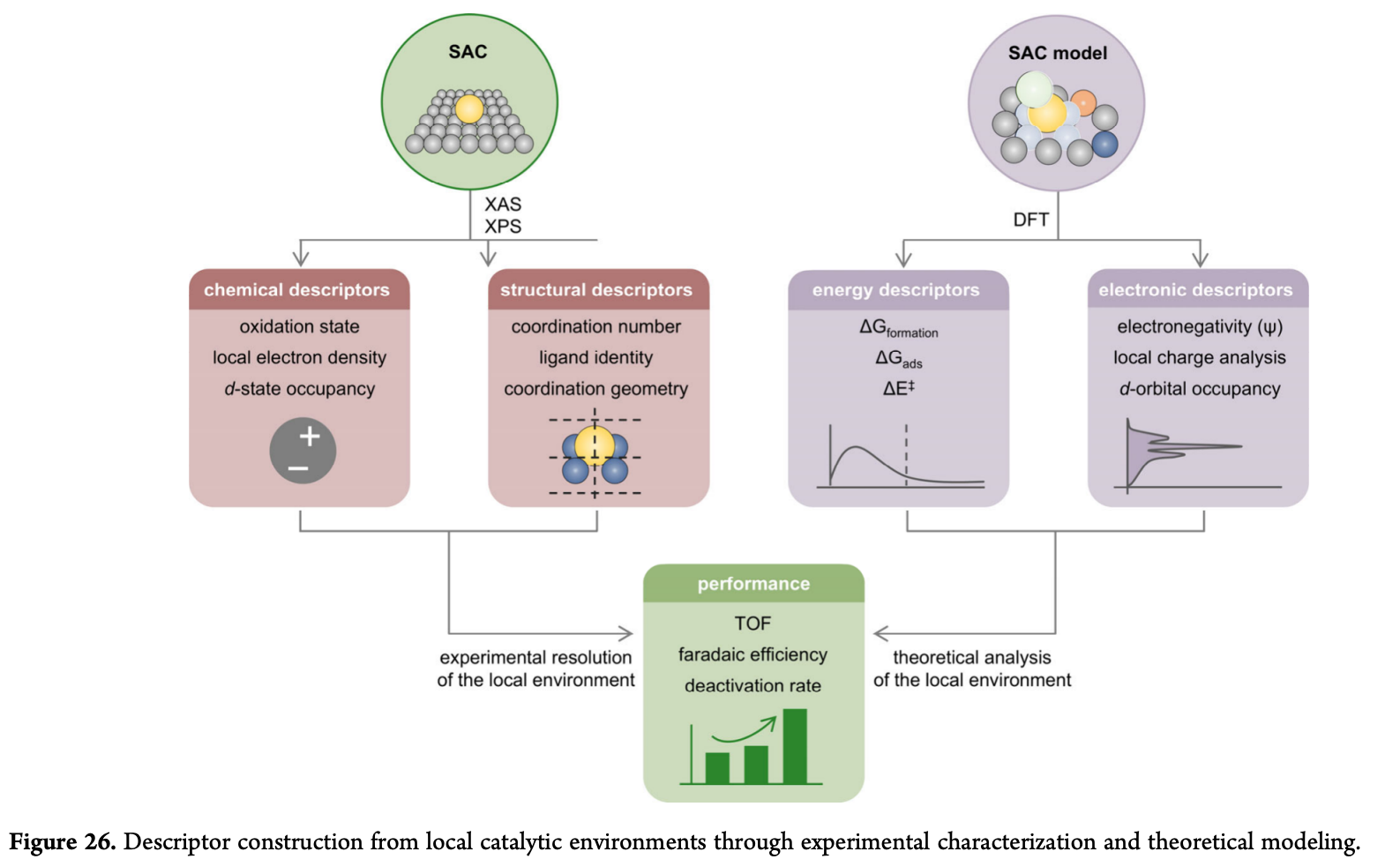
Figure 26 shows how experimental characterization and theoretical modelling translate local environments into descriptors. The experimental side includes chemical and structural quantities such as oxidation state, coordination number, ligand identity and coordination geometry. The theoretical side adds energetic and electronic quantities, including adsorption energies, activation barriers and local charge information.
These descriptors connect to performance measures such as turnover frequency, Faradaic efficiency and deactivation rate. The figure makes clear that different descriptors capture different aspects of the same environment: geometry describes how atoms are arranged, electronic quantities describe their bonding and charge distribution, and energetics describe their response to chemical transformations.
The review examines where these relationships are useful and where they become incomplete. An averaged coordination number can conceal several site populations. A correlation established within one catalyst family may change when the mechanism or support changes. A static descriptor may omit an important transition between working states.
The authors therefore develop the discussion toward multidimensional descriptions that include heterogeneity and dynamics. The aim is to connect performance with the environments available under the relevant conditions and with the pathways through which those environments interconvert.
Comparing thermal, electrochemical and photochemical systems
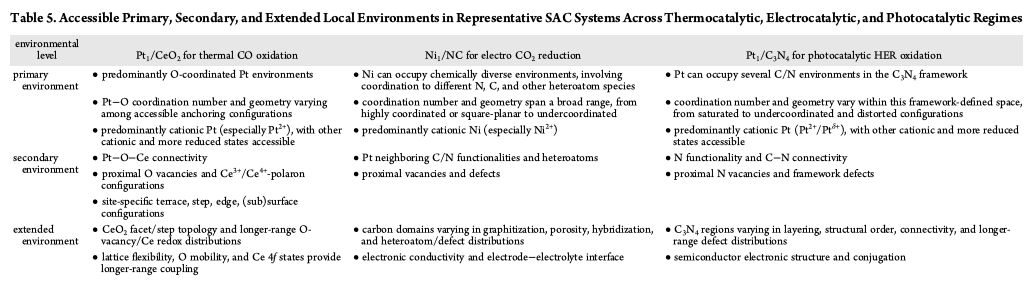
The case-study chapter applies the framework through Tables 5–9, with Table 5 providing the starting point. It compares the primary, secondary and extended environments of Pt₁/CeO₂ for thermal CO oxidation, Ni₁/NC for electrochemical CO₂ reduction and Pt₁/C₃N₄ for photocatalytic hydrogen evolution.
For Pt₁/CeO₂, the comparison includes Pt–O coordination, nearby oxygen vacancies and hydroxyls, and the wider topology and oxygen mobility of ceria. These features place the isolated platinum within a support that participates in oxygen chemistry.
For Ni₁/NC, direct coordination is considered alongside nearby heteroatoms and defects, while the extended carbon structure contributes porosity and conductivity. The subsequent tables bring electrolyte composition and electrode potential into the conditions that determine the working environment.
For Pt₁/C₃N₄, the framework includes local Pt coordination, neighbouring nitrogen functionality and defects, and broader properties such as conjugation and charge delocalization. Illumination and carrier dynamics then determine how this structural environment participates in hydrogen evolution.
Reading the three systems side by side shows how a common vocabulary can accommodate different mechanisms. The relevant environment in each case includes a distinct combination of coordination, nearby chemistry, support properties and operating conditions. The remaining tables extend the comparison to formation, characterization, dynamics and performance descriptors.
Building predictive environment maps
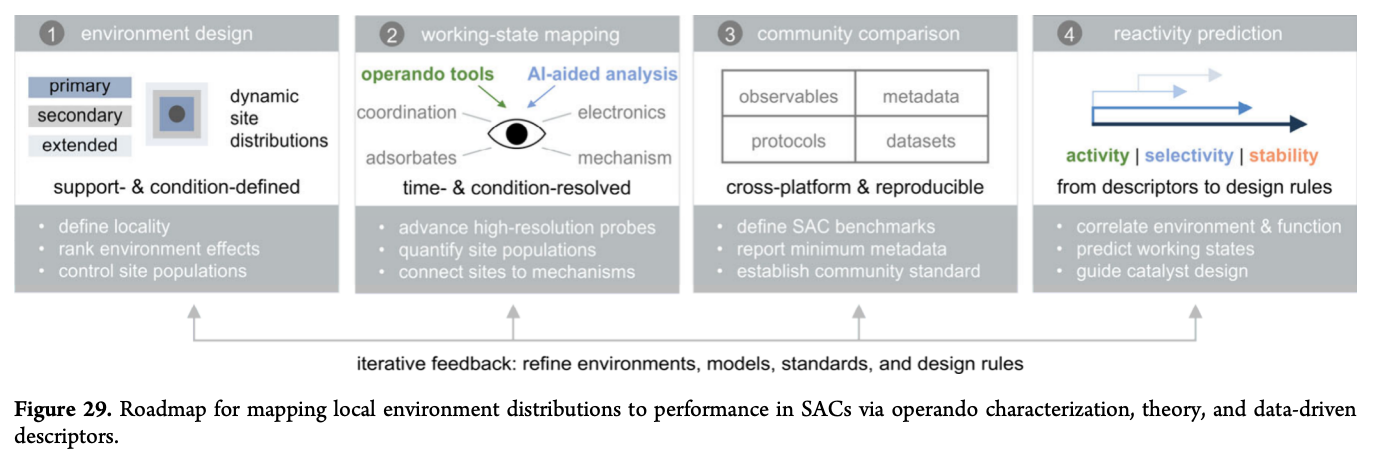
Figure 29 closes the review with four connected tasks: environment design, working-state mapping, community comparison and reactivity prediction. An iterative feedback loop links them so that new measurements and mechanistic insights can refine models, benchmarks and design rules.
Environment design begins by identifying which primary, secondary and extended features matter for a particular reaction. Working-state mapping then follows coordination, adsorbates and electronic structure with time- and condition-resolved measurements, supported by theory and data analysis.
Community comparison requires reproducible protocols, benchmark systems and sufficient metadata to reconstruct how a catalyst was made and tested. Precursor chemistry, support history, activation, metal content, site density and reaction conditions all help explain why nominally similar materials may behave differently.
Reactivity prediction connects these observations to activity, selectivity and stability. The roadmap emphasizes both abundant environments and minority states that may dominate function. Its feedback loop makes prediction part of an ongoing process in which experiments constrain models and models guide the next synthesis or measurement.
Takeaways and outlook
The review places the isolated metal atom within a multilevel, dynamic environment. Direct coordination, nearby species and broader support properties all contribute to catalytic behaviour, and their relative roles can change during operation.
The selected figures follow that argument from site distributions to environmental definitions, experimental and theoretical interpretation, synthesis, working-state evolution and performance descriptors. The comparative tables then apply the framework across three catalytic regimes, before the final roadmap connects these strands to predictive design.
The practical aim is an environment map that links preparation and operating conditions to the sites present, their catalytic contributions and their stability. Such a map would help researchers explain why apparently similar single-atom catalysts behave differently and identify which environmental features should be controlled next.
About the researchers
Andrea Ruiz-Ferrando, Sharon Mitchell and Javier Pérez-Ramírez are affiliated with the Institute for Chemical and Bioengineering at ETH Zurich and NCCR Catalysis. Javier Pérez-Ramírez is the corresponding author.
Original research
Andrea Ruiz-Ferrando; Sharon Mitchell; Javier Pérez-Ramírez. “Mapping Local Environments in Single-Atom Catalysts.” Chemical Reviews (2026). DOI: 10.1021/acs.chemrev.6c00373. Open access.
Original paper: https://doi.org/10.1021/acs.chemrev.6c00373
Research POP Notes
This article reflects the independent interpretation of the Research POP team and does not represent the views of the authors, their institutions or the journal. If you identify any inaccuracies or have concerns regarding the content, figures or attribution, please contact us at team.researchpop@gmail.com. We will review the matter promptly and make corrections or remove the relevant material where appropriate.