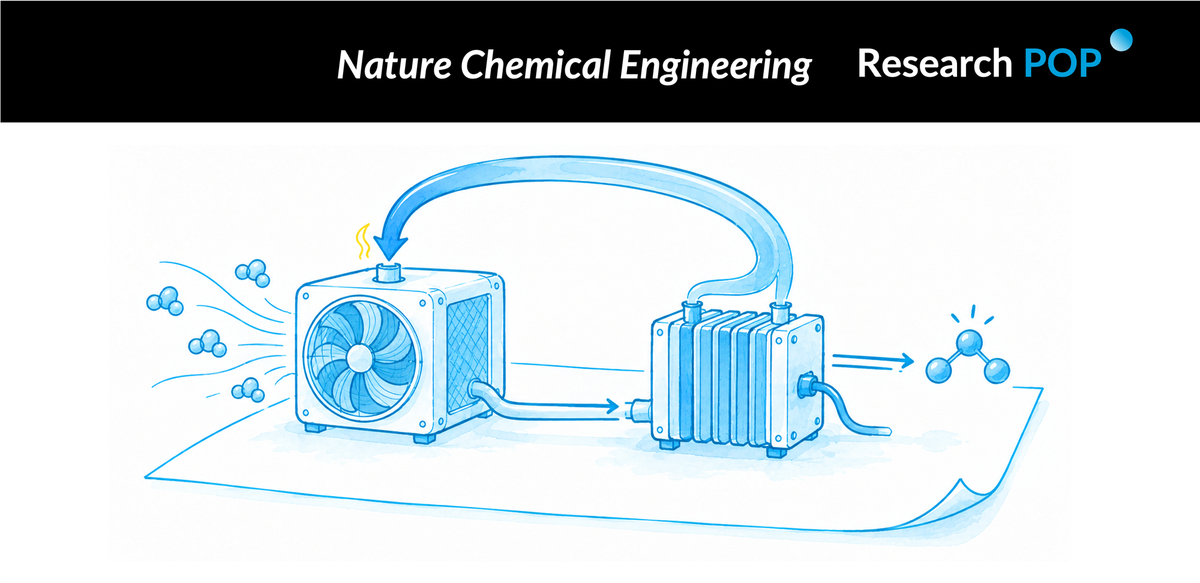
ETH Zurich-led team explores how hotter CO₂ electrolyzers could supply heat for carbon capture

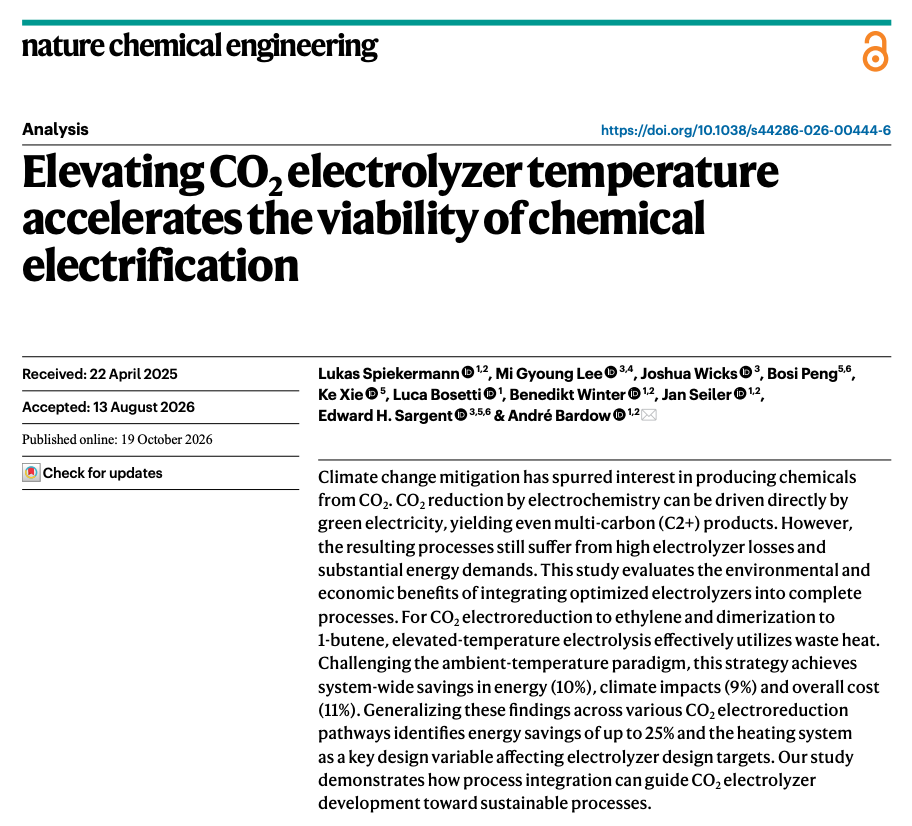
Source: https://www.nature.com/articles/s44286-026-00444-6
 Lukas Spiekermann
At a glance
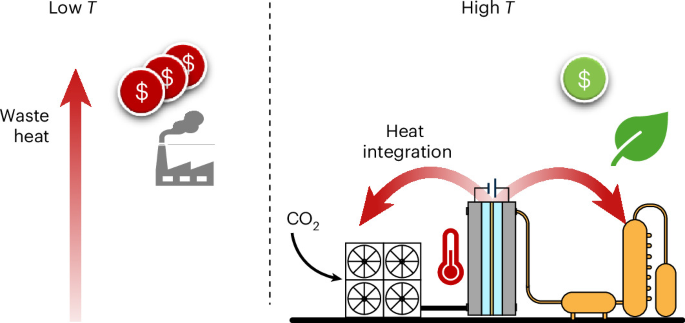
CO₂ electrolyzers are usually evaluated through their product selectivity, voltage and current density. A collaboration led by ETH Zurich examines another variable: operating temperature. Their process model shows how heat released during electrolysis could help supply the energy needed to capture CO₂.
The study follows an integrated route from captured CO₂ to ethylene and then 1-butene. Under the modelled conditions, recovering electrolyzer heat reduces total energy demand by up to 10%, climate impacts by up to 9% and cost by up to 11%. These maximum benefits arise across the scenarios examined.
The findings make elevated-temperature operation a potential development target alongside improved Faradaic efficiency and lower cell voltage. Realizing that benefit will require electrolyzers that maintain performance and durability at higher temperatures.
Background
Electrochemical CO₂ conversion uses electricity to turn carbon dioxide into chemical feedstocks. At the device level, Faradaic efficiency describes the fraction of electrical charge directed towards a particular product, while cell voltage helps determine the electricity required to drive the reaction.
A complete production process has additional energy demands. CO₂ must be captured and conditioned, products must be separated, unreacted material must be recycled, and equipment must be heated or cooled. A change that improves the electrolyzer can therefore affect several other parts of the plant.
Heat integration connects these operations by transferring heat from a process that releases it to one that needs it. Temperature determines whether that transfer is useful. A large amount of low-temperature heat may be unable to supply a hotter process directly, whereas heat available at a sufficiently high temperature can replace an external utility.
CO₂ capture provides a potential destination for electrolyzer heat. Regenerating a capture material requires energy, and some capture processes use relatively low-temperature heat. Operating an electrolyzer at a higher temperature could make its thermal losses useful to that upstream step.
The researchers investigate this relationship using 1-butene as a C₄ case study. Their model combines direct air capture, electrochemical CO₂ reduction to ethylene, ethylene dimerization, product separation and recycling. Techno-economic analysis and life-cycle assessment then quantify the consequences of different operating assumptions.
Research question
Can heat released by a CO₂ electrolyzer supply other process operations and reduce the need for external heating? How does that opportunity change with product selectivity, cell voltage, temperature, heating technology and CO₂ source?
The study compares a base case representing current experimental progress—50% ethylene Faradaic efficiency and a 2.5 V cell voltage—with an idealized upper-bound case of 100% efficiency and 1.4 V. These scenarios provide reference points for exploring improvements across the integrated process.
Inside the study
Following carbon and energy through the complete process
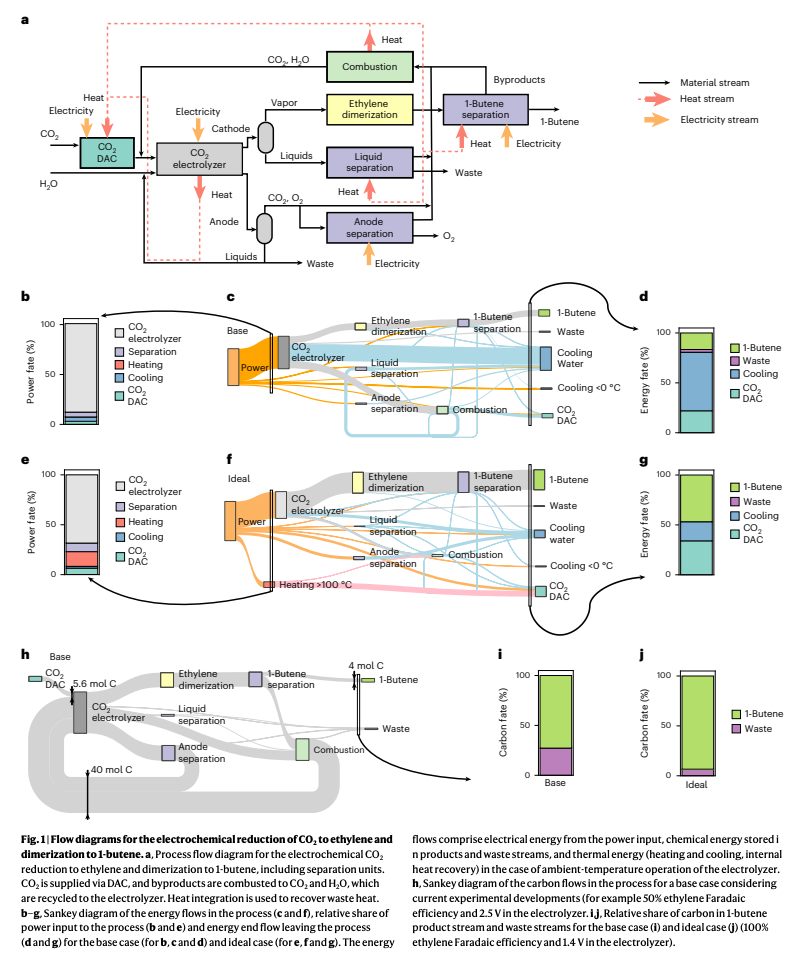
Figure 1 maps the route from captured CO₂ to 1-butene, showing how the electrolyzer connects to downstream conversion, separations and recycle loops.
Direct air capture supplies CO₂ to the electrolyzer, and the resulting ethylene proceeds to a dimerization reactor. Separation units recover 1-butene and manage other products, including hydrogen, carbon monoxide, ethanol, acetate, n-propanol and butane. Combustible byproducts can provide heat, with the resulting CO₂ returned to the process.
The accompanying Sankey diagrams show how strongly electrolyzer performance influences the wider system. In the base case, approximately 22% of the electrical input is stored as chemical energy in 1-butene, while about 50% is released as waste heat.
The idealized case raises the energy efficiency to 1-butene to 62%. Total process-and-utility electricity demand falls from 258 to 93 GJ per tonne of 1-butene, and carbon losses decrease from approximately 30% to 6%. Substantial internal recycling remains necessary even in this improved case.
These comparisons establish the scale of the opportunity: better electrolysis reduces electricity consumption, while process integration determines how the remaining energy flows are used.
Matching electrolyzer heat with capture demand
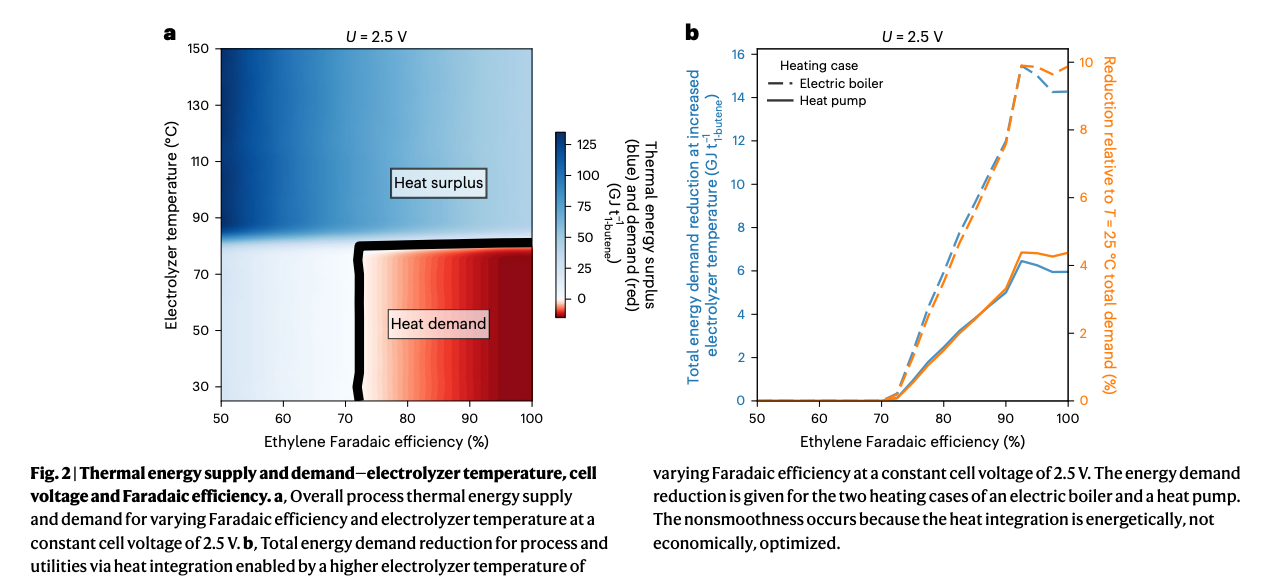
Figure 2 compares heat supply and demand as ethylene Faradaic efficiency and electrolyzer temperature change. It reveals a relationship between selectivity and the availability of internal process heat.
Higher ethylene selectivity produces fewer combustible byproducts, reducing the heat available from their combustion. Suppressing those byproducts remains beneficial because the electricity saved exceeds the heat that combustion could recover.
Elevated-temperature operation introduces another source: heat released by the electrolyzer itself. In scenarios using direct electric heating, recovering this heat lowers total energy demand by up to 10%.
Above approximately 90 °C, external heating is eliminated for most of the explored conditions because electrolyzer heat can supply the direct-air-capture unit. The analysis identifies roughly 80–90 °C as a useful range for experimental investigation, provided the materials and stack can sustain operation there.
The practical target is to recover useful heat from an increasingly efficient device while preserving its electrochemical performance.
Understanding why the heat source changes the climate outcome
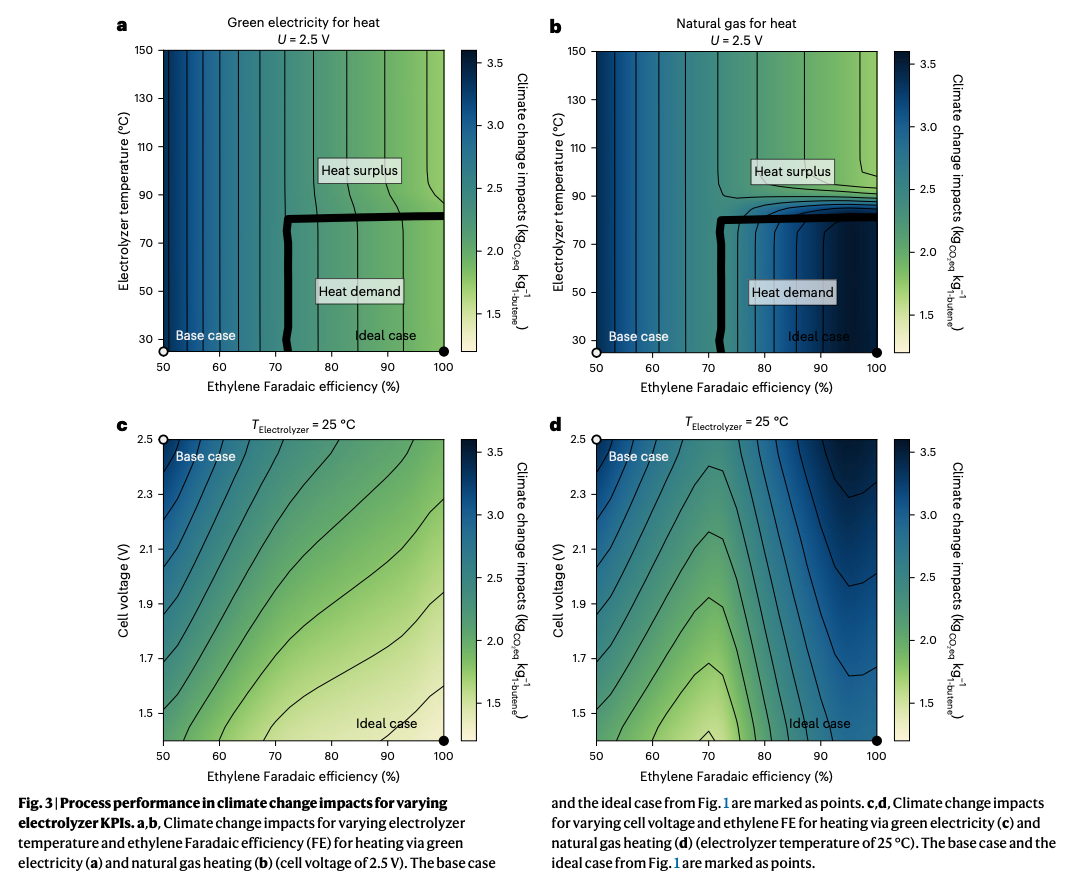
Figure 3 connects temperature, selectivity and cell voltage to life-cycle climate impacts. The results depend on how both electricity and process heat are supplied.
With decarbonized electrical heating, higher ethylene Faradaic efficiency, lower voltage and higher temperature generally improve the climate result. Starting from the base case, a ten-percentage-point increase in ethylene Faradaic efficiency provides approximately the same climate benefit as lowering cell voltage by 0.3 V.
The relationship changes when natural gas supplies process heat. Improving ethylene selectivity reduces byproduct formation and therefore decreases the heat available from internal combustion. Additional fossil heating can then offset some of the benefit obtained from lower electricity consumption.
This result links catalyst and electrolyzer development to the plant’s utility system. The environmental value of a device improvement depends partly on what replaces the energy flows that the improvement removes.
Quantifying climate and cost benefits
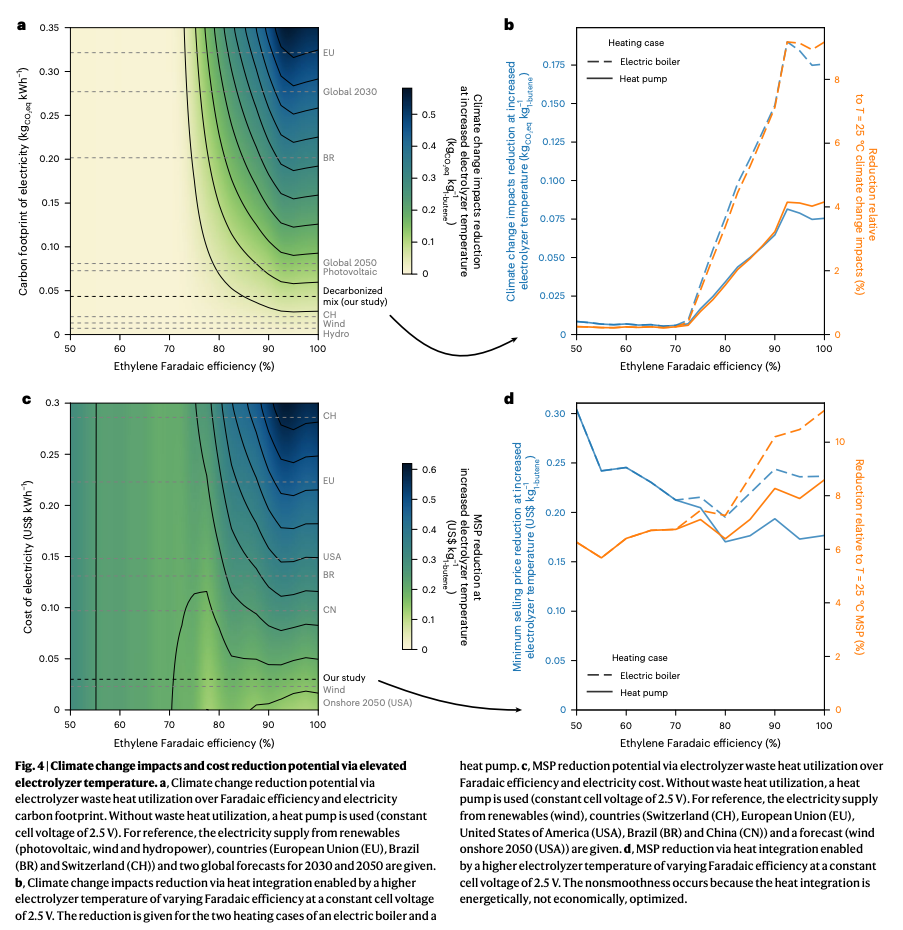
Figure 4 evaluates elevated-temperature operation across electricity carbon footprints, electricity prices and heating technologies. Across the modelled scenarios, waste-heat recovery reduces climate impacts by up to 9% and cost by up to 11%.
With electrified heating, the base-case tandem process has more than 30% lower climate impacts than the fossil-production reference. The idealized case reaches approximately 75% reduction. These comparisons include the broader process assumptions, rather than attributing the entire improvement to heat recovery.
The estimated minimum selling price of 1-butene decreases from approximately US$5.6 kg⁻¹ in the base case to US$1.3 kg⁻¹ in the idealized case. The paper’s fossil-reference range is US$1.09–1.87 kg⁻¹.
The analysis also considers a potential cost of hotter operation: faster component degradation. More frequent maintenance or replacement can erode the savings from heat recovery. Stack lifetime therefore becomes part of the temperature-design problem alongside energy efficiency.
Extending heat recovery to other products
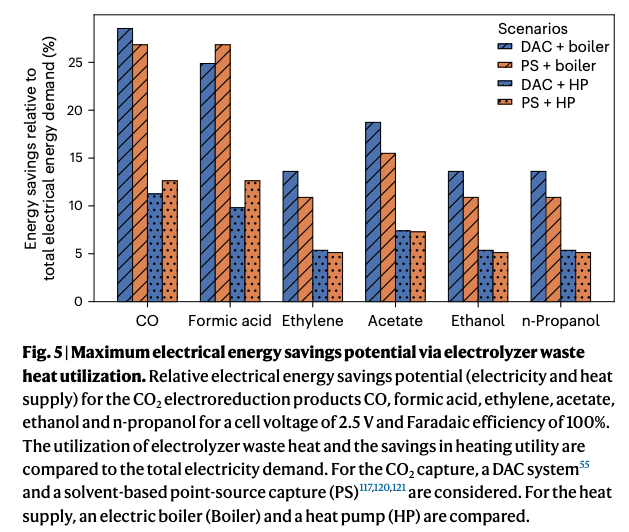
Figure 5 examines whether the same principle applies beyond the 1-butene process. The comparison includes CO, formic acid, ethylene, acetate, ethanol and n-propanol.
At a common cell voltage of 2.5 V and 100% Faradaic efficiency, the potential saving is approximately 5–27% of the total electricity required for process utilities, depending on the product, CO₂ source and heating technology.
The relative benefit is larger for small molecules such as CO and formic acid because CO₂-capture heat accounts for a larger share of their process energy demand. The choice between an electric boiler and a heat pump affects the calculated benefit more strongly than the choice between direct-air and point-source capture.
Where electrolyzer heat exceeds the capture requirement, the authors identify a further possibility: exporting the surplus to neighbouring operations through an industrial heat network. Its usefulness would depend on matching the temperature and timing of heat supply with local demand.
Takeaways and outlook
The study positions temperature as a process-level design variable for CO₂ electrolysis. Higher-temperature operation can make otherwise rejected heat useful for carbon capture, connecting device performance with the energy requirements of the wider plant.
The model also shows why improvements must be assessed together. Higher selectivity reduces electricity demand and byproduct formation, lower voltage changes the available waste heat, and the heating technology determines how recovered heat translates into climate and cost benefits.
These results are modelling projections rather than a demonstration of a commercial high-temperature plant. The next steps include experimental electrolysis at elevated temperatures, reliable stack-lifetime data, better separation strategies and integrated testing of capture, conversion and heat recovery. The central engineering question is whether useful heat can be delivered while maintaining the selectivity, efficiency and durability needed for sustained operation.
About the researchers
Lukas Spiekermann, Benedikt Winter and Jan Seiler are affiliated with ETH Zurich and NCCR Catalysis. Luca Bosetti is affiliated with ETH Zurich. André Bardow, also affiliated with ETH Zurich and NCCR Catalysis, is the corresponding author.
Original research
Lukas Spiekermann; Mi Gyoung Lee; Joshua Wicks; Bosi Peng; Ke Xie; Luca Bosetti; Benedikt Winter; Jan Seiler; Edward H. Sargent; André Bardow. “Elevating CO₂ electrolyzer temperature accelerates the viability of chemical electrification.” Nature Chemical Engineering 3, 597–610 (2026).
Original paper: https://doi.org/10.1038/s44286-026-00444-6
Research POP Notes
This article reflects the independent interpretation of the Research POP team and does not represent the views of the authors, their institutions or the journal. If you identify any inaccuracies or have concerns regarding the content, figures or attribution, please contact us at team.researchpop@gmail.com. We will review the matter promptly and make corrections or remove the relevant material where appropriate.