From rock musician to green chemistry pioneer: John Warner’s changing path

 Rebecca Trager

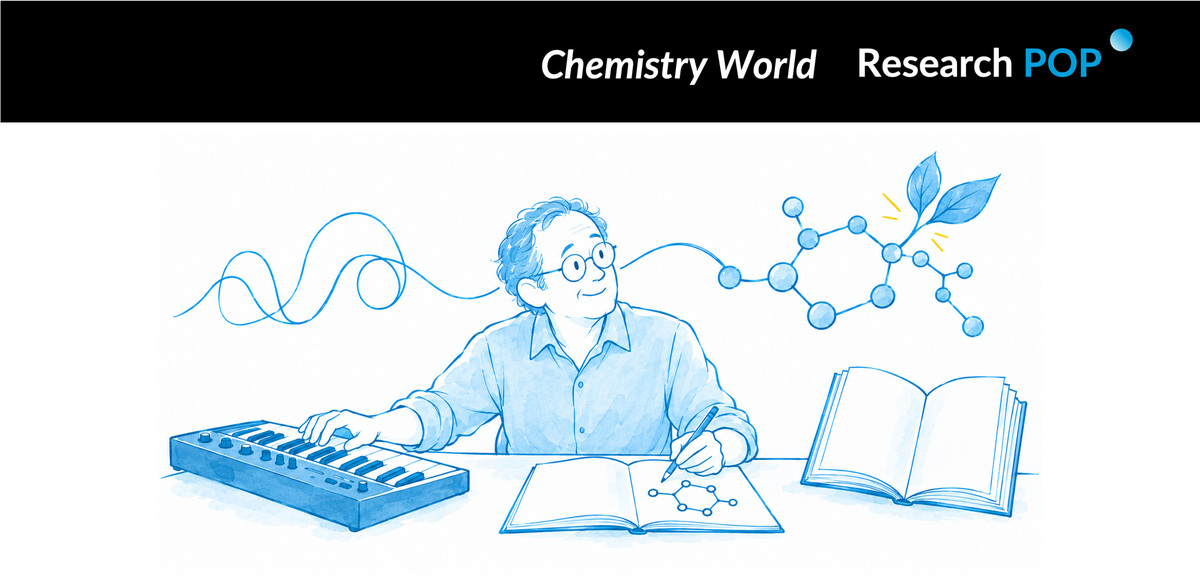
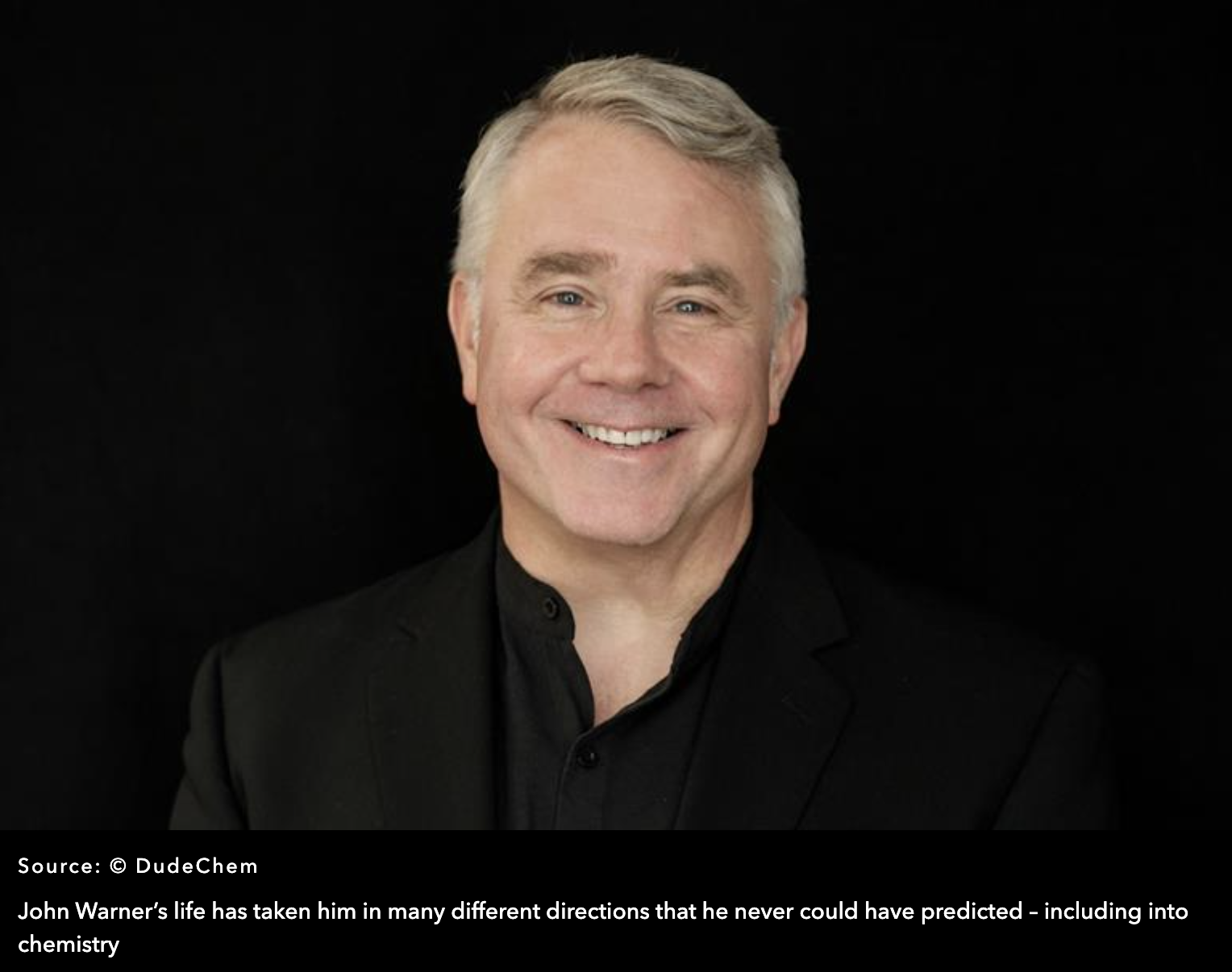
John Warner once imagined a future in music. As a teenager and early university student, he played synthesizer and keyboards in a local band called The Elements and planned to study music. When the band’s drummer died from leukaemia, the 17-year-old began to reconsider his direction.
In a Chemistry World profile, Rebecca Trager traces Warner’s journey from the stage to research laboratories, industrial chemistry and green-chemistry education. His career emerges through a series of experiences that changed both the questions he asked and his understanding of what chemistry could accomplish.
At the University of Massachusetts Boston, Warner became interested in biology and physics. Chemistry seemed to connect the two. A formative experience came when he entered the research laboratory of organic chemist Jean-Pierre Anselme alongside fellow student Paul Anastas.
Research revealed a creative side of chemistry that Warner had not encountered in coursework. He could design molecules and make something that had never existed before. He immersed himself in laboratory work, published papers early in his career and delivered his first presentation at an American Chemical Society national meeting at the age of 20.
After graduate training in organic chemistry at Princeton University, Warner expected to pursue medicinal chemistry in academia. An unexpected offer instead took him to Polaroid, where he led exploratory research.
Industrial work introduced a different set of demands. Chemical ideas had to function within the conditions and constraints of manufacturing. Warner became increasingly interested in why biological systems could assemble complex structures under comparatively mild conditions, and in how interactions between molecules and their surroundings might inform chemical design.
During his time at Polaroid, he reconnected with Anastas, who was helping to establish a green-chemistry programme at the US Environmental Protection Agency. Their conversations developed into a collaboration that would help define the field.
The profile also recounts a profound personal loss: the death of Warner’s two-year-old son from a birth defect. Warner wondered whether something he had encountered through his work might have contributed. The article establishes no causal connection. It describes how his unanswered questions exposed a gap in his scientific training: he knew how to make molecules, but had received far less preparation for understanding how their structures might affect human health and the environment.
That concern became part of a broader argument for changing how chemistry is designed and taught. In 1998, Warner and Anastas published Green Chemistry: Theory and Practice, setting out the 12 principles of green chemistry. These principles brought waste prevention, safer substances, energy efficiency, catalysis and other considerations into the design of chemical products and processes.
Warner later returned to the University of Massachusetts Boston, where he helped establish what the profile describes as the world’s first PhD programme in green chemistry. He subsequently joined the University of Massachusetts Lowell, continuing to connect chemical research with education.
In 2007, Warner and his wife, green chemist Amy Cannon, left their university positions and co-founded Beyond Benign, a non-profit organisation dedicated to green-chemistry education and curriculum reform. Warner also established the research organisation now known as Technology Greenhouse to develop safer chemical technologies.
Across these moves, a consistent idea emerges: changing chemistry requires changing the knowledge and choices available to the people practising it. Education can help researchers ask different questions, while experiments and molecular design determine whether safer alternatives can actually work.
Trager’s profile presents a career shaped by creativity, unexpected opportunities and personal loss. Warner’s continuing emphasis is on the scientific work required to turn green-chemistry principles into useful materials and processes.
Author: Rebecca Trager
Source: Chemistry World
Published: 21 October 2026
Original article: From rock musician to green chemistry pioneer: John Warner reflects on loss, discovery and the science that changed his life
Research POP Notes
This article reflects the independent interpretation of the Research POP team and does not represent the views of the authors, their institutions or the journal. If you identify any inaccuracies or have concerns regarding the content, figures or attribution, please contact us at team.researchpop@gmail.com. We will review the matter promptly and make corrections or remove the relevant material where appropriate.