Fudan, Tongji and Dalian teams locate the active oxygen vacancies at Cr/ZnO interfaces

Source: https://www.nature.com/articles/s41929-026-01615-7
At a glance
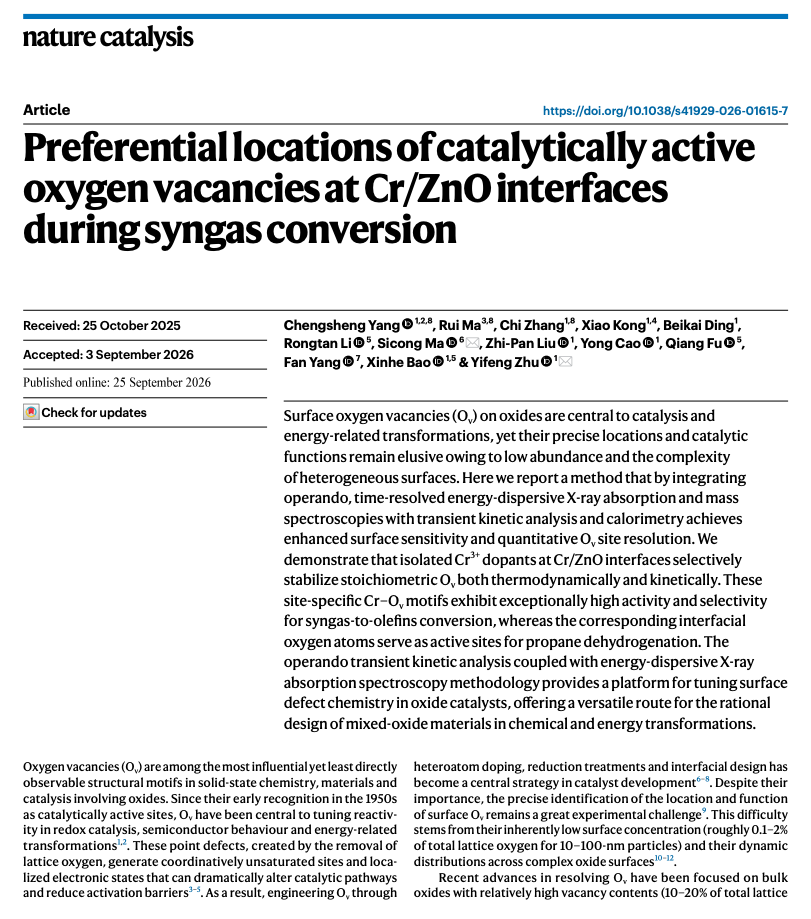
Oxygen vacancies are frequently used to explain the activity of oxide catalysts, but identifying exactly where a small, dynamic population of vacancies forms remains difficult. Researchers from Fudan University, Tongji University, the Dalian Institute of Chemical Physics and partner institutions locate the preferential vacancy site in dilute Cr/ZnO.
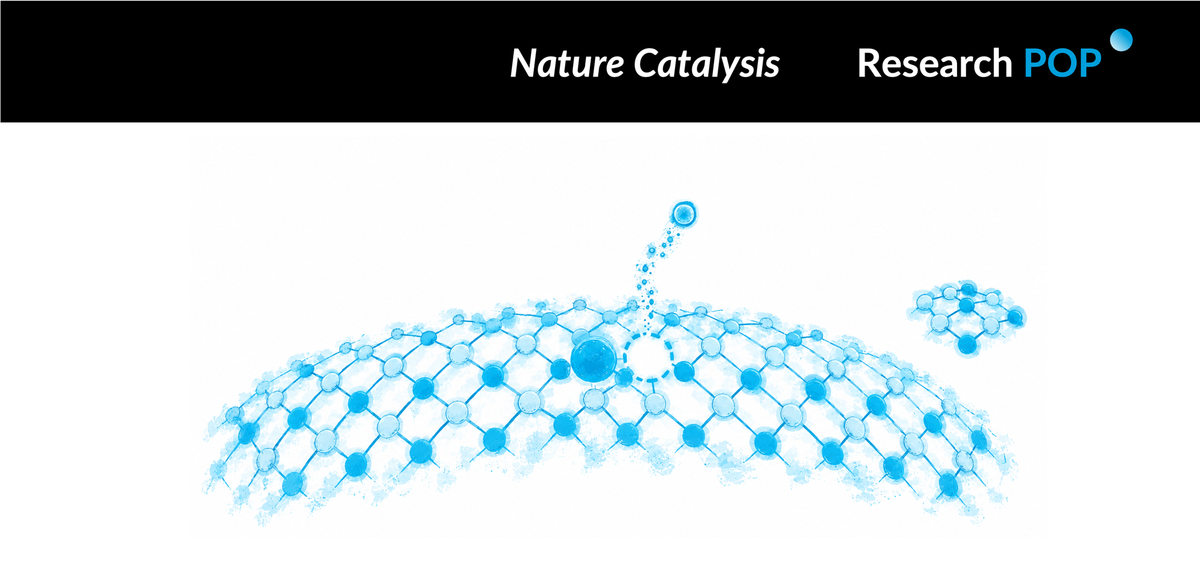
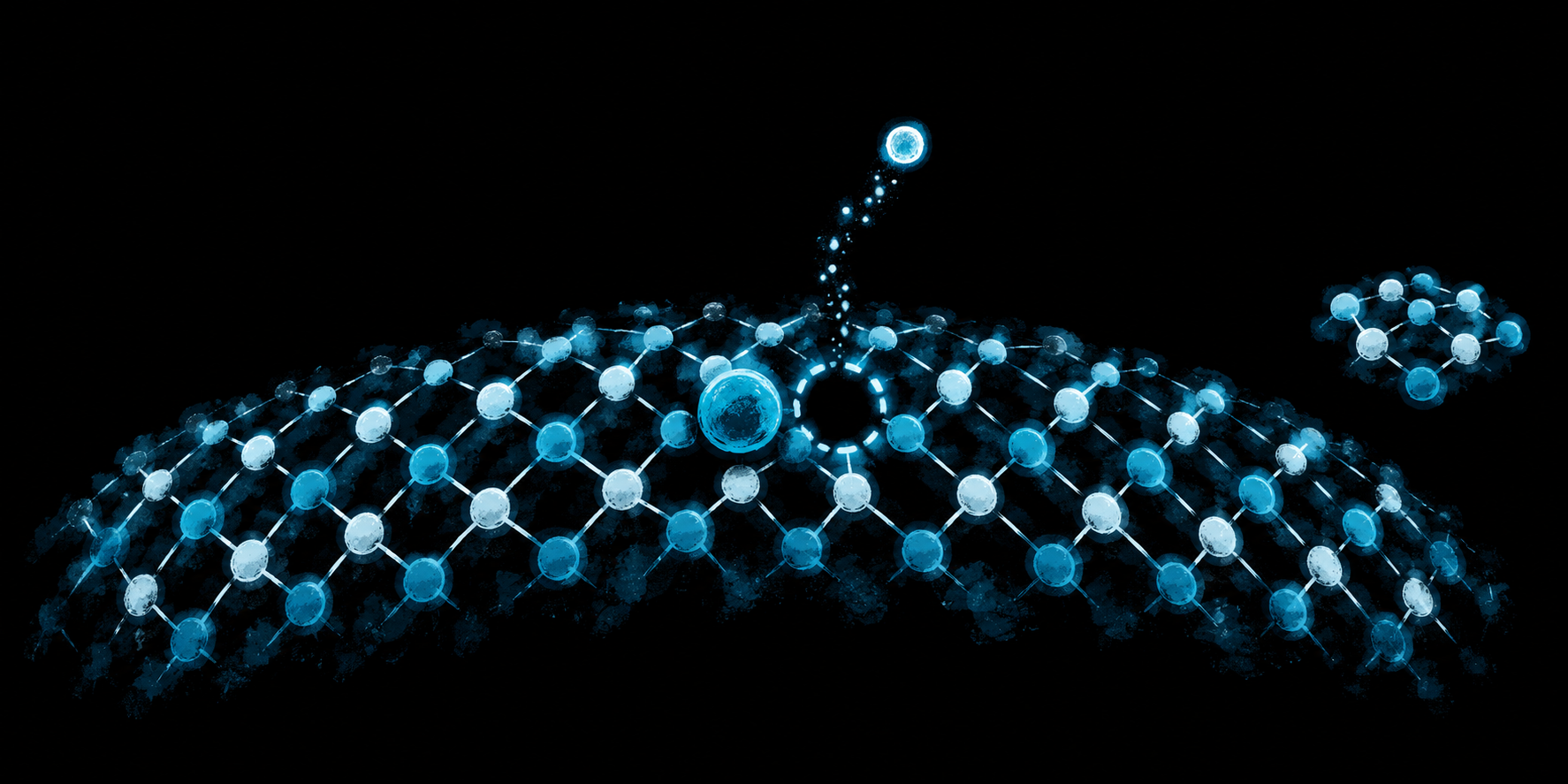
Rather than being distributed across ordinary ZnO regions or concentrated in Cr₂O₃ clusters, most vacancies form beside isolated Cr³⁺ atoms at Cr–O–Zn interfaces. Time-resolved operando spectroscopy, quantitative oxygen-removal measurements and calculations converge on a Crᵢₛₒ–Oᵥ–Zn motif containing isolated chromium, a removable bridging oxygen and neighbouring zinc.
The authors then connect this local structure with catalytic results in syngas conversion, methanol synthesis and oxidative propane dehydrogenation. The study follows the same motif from its formation and redox dynamics to its proposed catalytic role across several reactions.
Background
Removing an oxygen atom from a metal oxide changes its local electronic and geometric environment. Nearby metals may become more reduced, adsorption sites can open and molecules such as H₂, CO₂ or O₂ may interact differently. Oxygen vacancies can consequently influence hydrogen transfer, oxygen activation and redox cycling.
The term “oxygen vacancy” does not describe one universal active site. Vacancies on terraces, beside dopants, at interfaces or within clusters have different formation energies and neighbouring atoms. The first oxygen removed may come from a site representing only a small fraction of the lattice.
Most atoms in an oxide nanoparticle are not at the surface, and only a minority of surface oxygen may participate. Bulk-averaged measurements can show oxygen removal without locating its original position, while measurements made before or after reaction may miss defects that appear and disappear with the gas environment.
Dilute metal incorporation creates local interfaces without covering the support with a separate bulk phase. In Cr/ZnO, low loading favours isolated Cr³⁺ centres, while higher loading introduces Cr₂O₃ clusters. This provides three environments to compare: isolated chromium, oxide clusters and ordinary Zn–O–Zn regions.
Research question
Where does oxygen leave first when Cr/ZnO is reduced, why is that local environment favoured, and how does the resulting Crᵢₛₒ–Oᵥ–Zn vacancy participate in catalytic reactions?
Inside the study
The catalyst series contains 0.3–1.8 wt% chromium on ZnO. At the lowest loading, chromium is predominantly present as isolated Cr³⁺ in Cr–O–Zn environments. As loading increases, Cr₂O₃ clusters begin to form, but the isolated population remains substantial. Even at 1.8 wt% Cr, the authors estimate that 64% of chromium remains isolated while 36% belongs to Cr₂O₃ clusters.
Hydrogen temperature-programmed reduction provides an initial distinction between these structures. Cr/ZnO-0.3 begins reducing near 350 °C, whereas pure ZnO does not show comparable oxygen removal until temperatures above 590 °C. The large shift indicates that dilute chromium changes the ease with which neighbouring lattice oxygen can be removed.
The researchers repeatedly switched the catalyst at 400 °C between 20% H₂ in argon and air while X-ray absorption recorded the chromium environment once per second. The Cr white-line response developed over approximately 350 s during reduction but recovered in about 10 s during reoxidation.
Synchronized mass spectrometry detected water formation on the same timescale. Hydrogen removes lattice oxygen as H₂O, connecting the evolving Cr environment with oxygen loss. Repeated cycles show that the local motif is dynamically generated and replenished.
Quantitative measurements then establish how much oxygen is removed. Cr/ZnO-0.3 loses about 0.07 mmol g⁻¹, while Cr/ZnO-1.8 loses approximately 0.25 mmol g⁻¹. For the higher-loading sample, the authors assign about 88% of the vacancies to isolated Cr³⁺ environments and 12% to Cr₂O₃ clusters, with little measurable contribution from ordinary ZnO.
The isolated-chromium-to-vacancy ratio is close to one to one, supporting one preferential vacancy beside each responsive Cr site rather than unrestricted reduction of the surrounding ZnO lattice.
Density-functional-theory calculations explain the preference. Forming the first vacancy beside isolated Cr requires about 2.5 eV, lower than the 2.67–2.69 eV values calculated for ZnO and cluster environments. Removing a second oxygen near the same isolated chromium would require about 3.9 eV. The energetic pattern favours separated single vacancies associated with individual Cr centres rather than multiple vacancies accumulating around one site.
Experimentally derived vacancy-formation activation energies are 55–69 kJ mol⁻¹ for Cr/ZnO, compared with 131 kJ mol⁻¹ for ZnO. An independent operando analysis gives approximately 62 kJ mol⁻¹. These kinetic values complement, but are not directly interchangeable with, the calculated formation energies.
Once partial reduction generates Crᵢₛₒ–Oᵥ–Zn, the neighbouring framework activates hydrogen more readily. The apparent barrier for H₂ dissociation falls to about 18 kJ mol⁻¹. Vacancy formation thus changes the reactivity of chromium and zinc around the empty lattice position.
The team next examined the motif in catalytic systems. In a tandem catalyst combining Cr/ZnO with SAPO-18 for syngas conversion, increasing chromium loading raised CO conversion from about 20% to 41% and light-olefin selectivity from 60% to 71%. The light-olefin yield was approximately three times that of the ZnO reference. The reported site-normalized CO turnover frequency for Crᵢₛₒ–Oᵥ–Zn was 146.3 h⁻¹.
The comparison was extended to methanol synthesis. At 280 °C and 4 MPa, Cr/ZnO reached about 3% CO conversion with 80% methanol selectivity, compared with 0.5% conversion and 60% selectivity on ZnO. These conditions and metrics belong to the methanol test and are separate from the tandem syngas-to-olefins result.
For oxidative propane dehydrogenation, the reported propene-formation turnover frequency of an isolated Crᵢₛₒ–O–Zn site was 22.6 h⁻¹. This value was 1.8 times that of Zn–O–Zn and 3.8 times that of the cluster-associated site. The three reaction sets connect dilute interfacial chromium environments with catalytic behaviour under distinct conditions.
Takeaways and outlook
The study narrows the broad label of an oxygen vacancy to a specific local structure. Isolated Cr³⁺ weakens the adjacent Cr–O–Zn environment enough for the first bridging oxygen to be removed preferentially, while the high energy of a second removal limits further vacancy accumulation at the same centre.
Its main contribution is the combination of location, quantity and dynamics. Operando X-ray absorption follows the chromium environment in time, mass spectrometry tracks oxygen removal as water, quantitative measurements assign the vacancy population and calculations compare competing sites. Catalytic tests then relate the identified motif to turnover in several reaction classes.
Future work can examine how the vacancy population changes under each complete reaction mixture and whether the same one-to-one motif persists across temperature, pressure and conversion. The approach provides a framework for locating minority defects at other dilute oxide interfaces rather than inferring their position from overall reduction alone.
About the researchers
Chengsheng Yang (Fudan University and Nanjing University), Rui Ma (Zhejiang Normal University) and Chi Zhang (Fudan University) are equal first authors. Sicong Ma (Tongji University) and Yifeng Zhu (Fudan University) are the corresponding authors.
The other authors are Xiao Kong (Fudan University and University of Shanghai for Science and Technology), Beikai Ding, Zhi-Pan Liu and Yong Cao (Fudan University), Rongtan Li and Qiang Fu (Dalian Institute of Chemical Physics, Chinese Academy of Sciences), Fan Yang (ShanghaiTech University), and Xinhe Bao (Fudan University and Dalian Institute of Chemical Physics).
Original research
Chengsheng Yang; Rui Ma; Chi Zhang; Xiao Kong; Beikai Ding; Rongtan Li; Sicong Ma; Zhi-Pan Liu; Yong Cao; Qiang Fu; Fan Yang; Xinhe Bao; Yifeng Zhu. “Preferential locations of catalytically active oxygen vacancies at Cr/ZnO interfaces during syngas conversion.” Nature Catalysis (2026). https://doi.org/10.1038/s41929-026-01615-7.
Research POP Notes
This article reflects the independent interpretation of the Research POP team and does not represent the views of the authors, their institutions or the journal. If you identify any inaccuracies or have concerns regarding the content, figures or attribution, please contact us at team.researchpop@gmail.com. We will review the matter promptly and make corrections or remove the relevant material where appropriate.