Institute of Physics and Dalian Institute of Chemical Physics team separates space and electric-field effects in photoelectrochemical water splitting


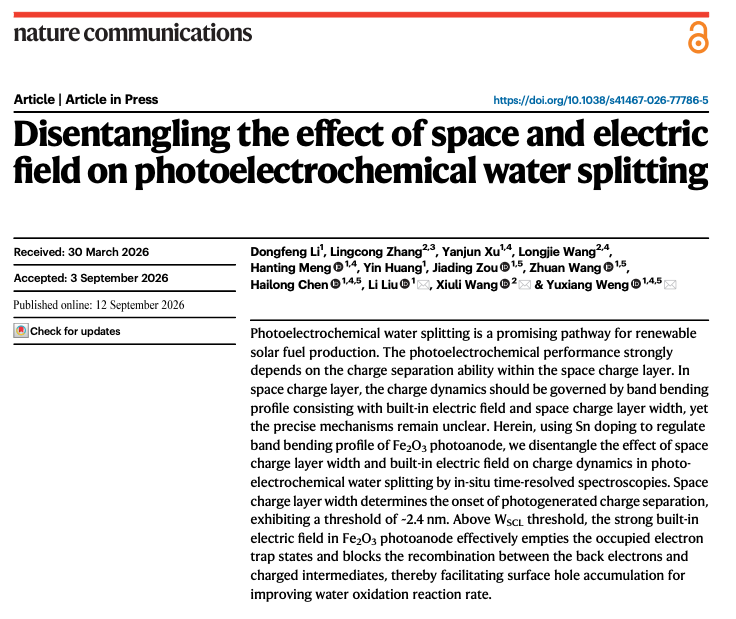
Source: https://www.nature.com/articles/s41467-026-77786-5
At a glance
Photoelectrochemical water splitting uses semiconductor electrodes to turn light energy into chemical fuel. Its charges must remain separated long enough to reach different reaction sites. Near the semiconductor-electrolyte interface, band bending produces a space-charge layer and a built-in electric field: the first describes the distance over which band bending extends, and the second its driving force. Because both change with applied potential, their individual roles have been difficult to distinguish.
A team from the Institute of Physics and the Dalian Institute of Chemical Physics of the Chinese Academy of Sciences, together with collaborators, used pristine and tin-doped hematite, Fe2O3, as a model system. Combining photoelectrochemical measurements with in situ transient absorption spectroscopy from femtoseconds to seconds, the researchers report that the space-charge-layer width determines when reactive charge separation begins. In their Fe2O3 system, that onset appeared at about 2.4 nm. Once the layer was wider than this material-specific threshold, a stronger built-in electric field helped empty occupied electron traps and suppress recombination between back electrons and charged water-oxidation intermediates.
Background
When a photoanode absorbs light, it creates electrons and holes. For water oxidation, holes must reach the electrode surface and participate in the reaction, while electrons must be collected in the opposite direction. Recombination removes those charges before they can perform chemical work. Band bending near the interface can assist separation by creating an internal electric field, but the response depends on both the magnitude of that field and the distance over which it acts.
Previous studies have linked wider space-charge layers or stronger fields with improved separation, but applied potential often changes both together. The authors therefore sought photoanodes with similar flat-band potentials but oppositely changing width and field strength.
Research question
The study asked whether the space-charge-layer width controls the onset of effective photogenerated charge separation and, after that onset, how the built-in electric field affects trap occupancy, long-lived charge accumulation and back-electron recombination. It also asked which timescale of charge dynamics best follows the photoelectrochemical water-oxidation response: the initial femtosecond-to-nanosecond events or the later microsecond-to-second processes.
Inside the study
The researchers prepared FeOOH films on fluorine-doped tin oxide and converted them to hematite by heat treatment. For the doped comparison, the precursor film was immersed in a SnCl2 solution before annealing. Mott-Schottky measurements gave a majority-carrier density of 2.6 × 10^20 cm−3 for Sn-Fe2O3 and 1.2 × 10^20 cm−3 for pristine Fe2O3. Both photoanodes had a flat-band potential of approximately 0.34 V versus the reversible hydrogen electrode. Under the authors' model, the higher carrier density in Sn-Fe2O3 compressed the space-charge layer while increasing the surface built-in electric field at the same applied potential.
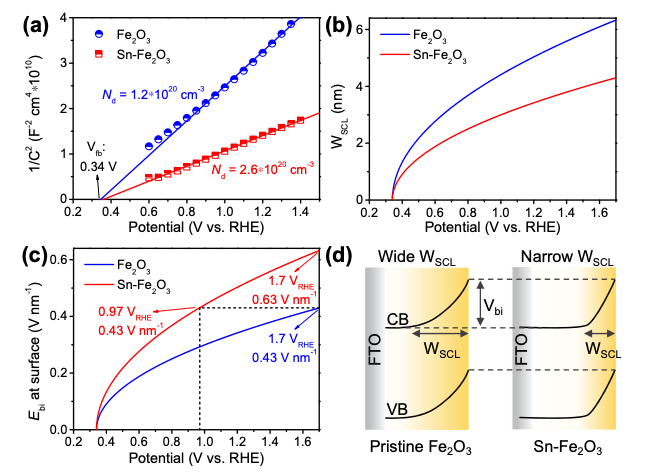
Fig. 1: The functions of Sn doping into Fe2O3.
Sn-Fe2O3 reached a surface field of about 0.43 V nm−1 at 0.97 VRHE, whereas pristine Fe2O3 required about 1.7 VRHE. The authors report comparable traps, transport, morphology, structure and absorption, supporting Sn doping as a band-bending control. These comparisons point to supplementary figures and are included only as main-text statements; Research Pop did not use the Supporting Information.
In NaOH under 365 nm illumination at 17 mW cm−2, Sn-Fe2O3 produced less photocurrent below about 1.2 VRHE, a similar current near 1.2 VRHE and more above it. The plotted potentials were not corrected for solution resistance, and the crossover showed that Sn doping did not improve every operating region equally.
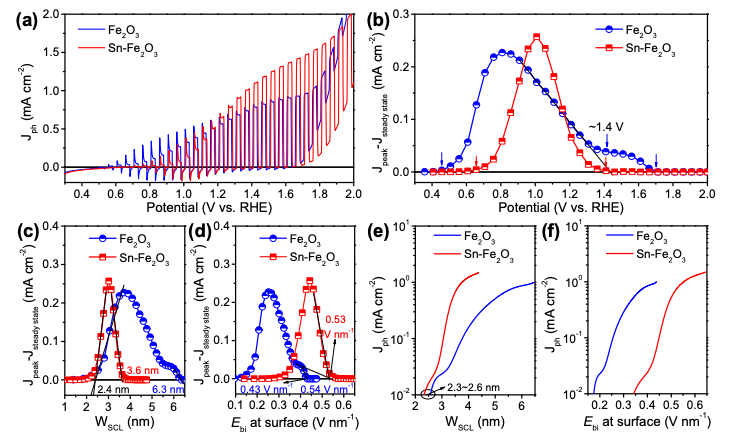
Fig. 2: PEC performances.
Transient current spikes appeared at approximately 0.45 VRHE for pristine Fe2O3 and 0.65 VRHE for Sn-Fe2O3. Although the potentials differed, both onsets corresponded to a space-charge-layer width of about 2.4 nm. The steady-state photocurrent onset likewise occurred at widths of 2.3 to 2.6 nm. The authors therefore identify approximately 2.4 nm as a threshold for reactive charge separation in this hematite system. They relate that distance to about eleven FeO6 octahedral units.
The main text also reports hematite thresholds of 2.4 to 3.0 nm after varying pH, illumination intensity, temperature and electrolyte. Measurements described for other photoanodes gave ranges of 0.5 to 1.5 nm for WO3, 3.0 to 7.4 nm for BiVO4 and 0.9 to 1.1 nm for TiO2. These comparisons support the existence of a threshold across several materials, while also showing that the numerical value is material dependent. The authors note that the thresholds are consistent with calculated Debye screening lengths and interpret charge screening as a factor that sets the onset of reactive separation.
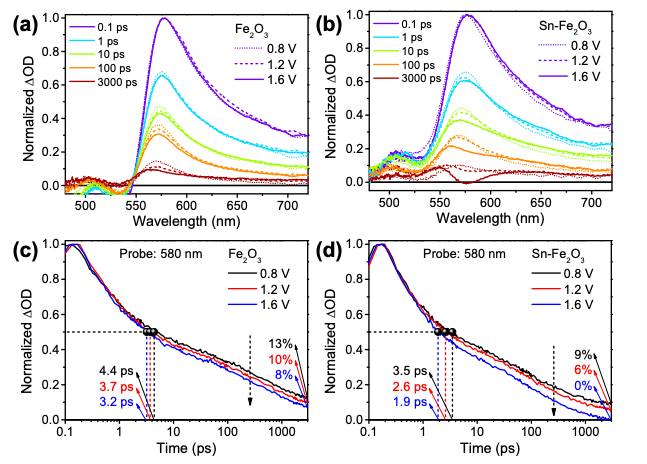
Fig. 3: Ultrafast charge separation and trapping dynamics.
At higher potential, the transient spikes gradually disappeared. Their disappearance occurred near 1.4 VRHE for Sn-Fe2O3 and near 1.7 VRHE for pristine Fe2O3. A linear analysis of selected regions gave similar surface built-in fields at the disappearance point, approximately 0.53 V nm−1 for Sn-Fe2O3 and 0.54 V nm−1 for pristine Fe2O3. The authors use this convergence to argue that, once the space-charge layer is wider than the separation threshold, field strength becomes the main factor suppressing back-electron recombination.
Femtosecond transient absorption spectroscopy followed the initial trapping and separation processes at 0.8, 1.2 and 1.6 VRHE. At a 580 nm probe wavelength, the reported half-lifetimes for pristine Fe2O3 were 4.4, 3.7 and 3.2 ps across those potentials. For Sn-Fe2O3 they were 3.5, 2.6 and 1.9 ps. The authors associate the shorter lifetimes and reduced residual signal with faster electron trapping and enhanced initial charge separation. However, Sn-Fe2O3 showed this ultrafast advantage even at low potential, where its photocurrent remained below that of pristine Fe2O3. The study therefore does not treat ultrafast separation alone as the determining factor for the operating photoelectrochemical response.
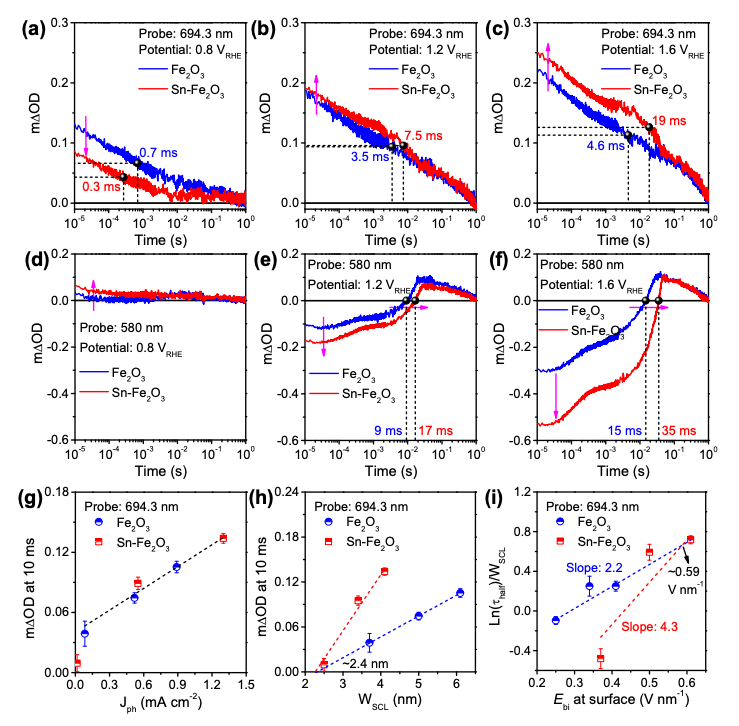
Fig. 4: Hole transfer and electron de-trapping processes.
The microsecond-to-second measurements tracked trapped electrons at 580 nm and photoinduced holes at 694.3 nm. At 0.8 VRHE, pristine Fe2O3 had a 3.7 nm space-charge layer, a surface field of 0.25 V nm−1 and a hole lifetime of 0.7 ms. Sn-Fe2O3 had a narrower 2.5 nm layer, a stronger 0.37 V nm−1 field and a shorter 0.3 ms lifetime. The wider region in pristine Fe2O3 was associated with more long-lived holes and the higher low-potential photocurrent.
Near 1.2 VRHE, the two photoanodes produced comparable hole-signal amplitudes and photocurrents, representing a balance between a wider separation region in pristine Fe2O3 and stronger suppression of charge loss in Sn-Fe2O3. At 1.6 VRHE, both layers were above the proposed width threshold. Sn-Fe2O3 then had a surface field of about 0.61 V nm−1, a hole-signal amplitude of 0.25 mΔOD and a lifetime of 19 ms. The corresponding values for pristine Fe2O3 were about 0.41 V nm−1, 0.22 mΔOD and 4.6 ms. The zero-crossing time of the trapped-electron signal was also longer for Sn-Fe2O3: 35 ms compared with 15 ms. These later-time dynamics closely followed the photocurrent trend.
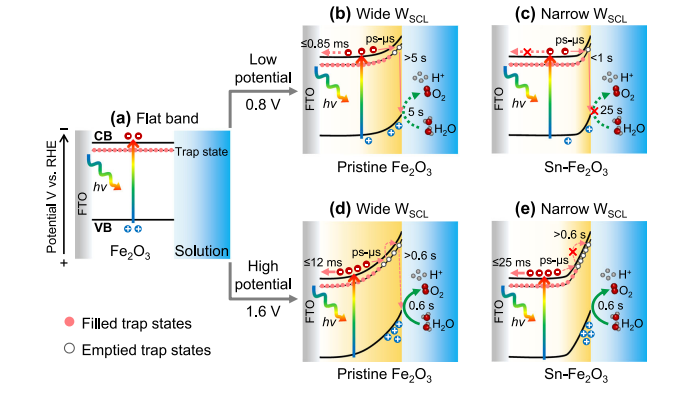
Fig. 5: The effect of band bending profiles on charge trapping, transfer, and recombination.
The authors interpret the high-potential behavior as follows. A stronger built-in field not only drives charge separation but helps remove intrinsic electrons occupying trap states. The newly emptied states can capture photogenerated electrons, while the reverse field slows their return toward the surface and their recombination with charged oxygen-evolution intermediates. This mechanism integrates spectroscopic signals, electrochemical behavior and kinetic correlations; it is an interpretation of those measurements rather than direct imaging of every electron-transfer step.
Takeaways and outlook
The study gives the width and strength of band bending distinct roles within its hematite model. At low potential, a sufficiently wide space-charge layer allows more photogenerated charges to undergo spatial separation. Once the material-specific width threshold has been crossed, the built-in electric field has a larger role in emptying traps and preventing back recombination. This explains why Sn doping can accelerate initial charge separation yet shift the photocurrent onset in an unfavorable direction, before improving photocurrent at higher potential.
The authors suggest combining different band-bending profiles through multilayer or gradient doping, and optimizing charge screening and field strength for the photoelectrode being used. As a mechanistic study of model photoanodes under alkaline, externally biased conditions, the paper provides a testable physical framework for designing and comparing future photoelectrodes. Its separation of width and field effects can now guide experiments on multilayer, gradient-doped and interface-engineered photoelectrodes.
About the researchers
Dongfeng Li (Institute of Physics, Chinese Academy of Sciences)
Lingcong Zhang (Dalian Institute of Chemical Physics, Chinese Academy of Sciences; Nankai University)
Yanjun Xu (Institute of Physics, Chinese Academy of Sciences; University of Chinese Academy of Sciences)
Longjie Wang (Dalian Institute of Chemical Physics, Chinese Academy of Sciences; University of Chinese Academy of Sciences)
Hanting Meng (Institute of Physics, Chinese Academy of Sciences; University of Chinese Academy of Sciences)
Yin Huang (Institute of Physics, Chinese Academy of Sciences)
Jiading Zou (Institute of Physics, Chinese Academy of Sciences; Songshan Lake Materials Laboratory)
Zhuan Wang (Institute of Physics, Chinese Academy of Sciences; Songshan Lake Materials Laboratory)
Hailong Chen (Institute of Physics, Chinese Academy of Sciences; University of Chinese Academy of Sciences; Songshan Lake Materials Laboratory)
Li Liu (Institute of Physics, Chinese Academy of Sciences)
Xiuli Wang (Dalian Institute of Chemical Physics, Chinese Academy of Sciences)
Yuxiang Weng (Institute of Physics, Chinese Academy of Sciences; University of Chinese Academy of Sciences; Songshan Lake Materials Laboratory)
Dongfeng Li is the first author. Li Liu, Xiuli Wang and Yuxiang Weng are the corresponding authors.
Original research
Dongfeng Li; Lingcong Zhang; Yanjun Xu; Longjie Wang; Hanting Meng; Yin Huang; Jiading Zou; Zhuan Wang; Hailong Chen; Li Liu; Xiuli Wang; Yuxiang Weng. Disentangling the effect of space and electric field on photoelectrochemical water splitting. Nature Communications, Article in Press, 2026. DOI: 10.1038/s41467-026-77786-5. Published online 12 September 2026. Open access under CC BY-NC-ND 4.0. Images reproduced without modification.
Research POP Notes
This article reflects the independent interpretation of the Research POP team and does not represent the views of the authors, their institutions or the journal. If you identify any inaccuracies or have concerns regarding the content, figures or attribution, please contact us at team.researchpop@gmail.com. We will review the matter promptly and make corrections or remove the relevant material where appropriate.