Zhejiang University Team Uses Red Mud to Convert Plastic into Hydrogen and Reinforcement for Construction Materials

 Mingyue Yan
At a glance
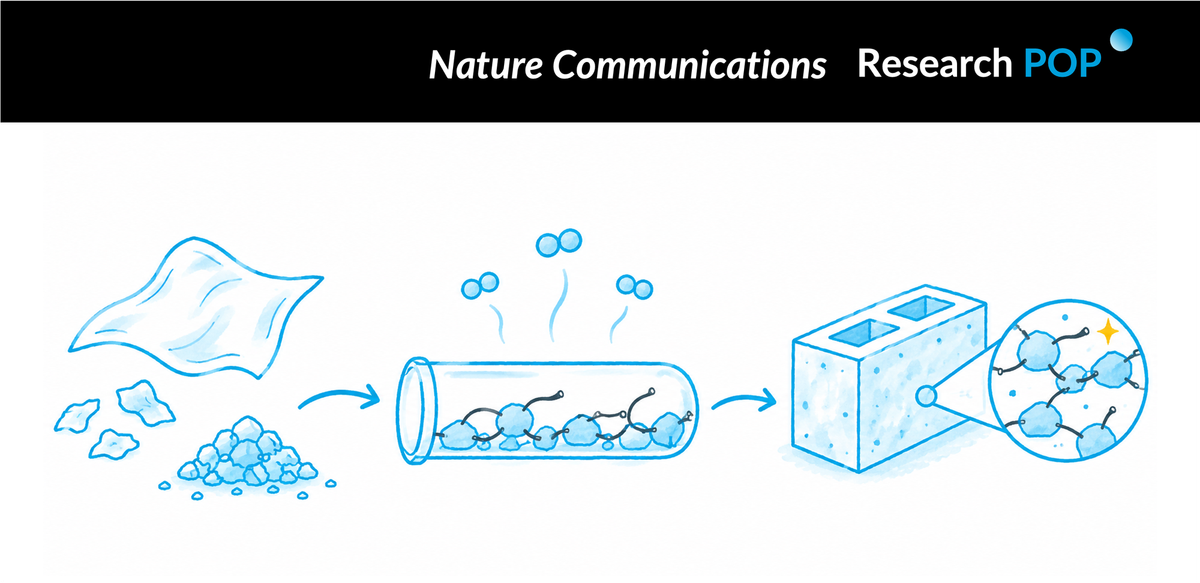
Researchers at Zhejiang University report a process that connects plastic conversion with the reuse of red mud, an iron-rich residue from alumina production. Red mud catalyses the conversion of plastic pyrolysis vapours into hydrogen and carbon nanotubes. The resulting carbon-nanotube/red-mud composite is then incorporated directly into alkali-activated construction materials.
At a red-mud-to-polyethylene mass ratio of 1:4, the process produces 21.0 mmol of hydrogen and 262 mg of carbon nanotubes per gram of plastic. Adding 1 wt% of the composite to the construction material increases compressive strength by 33.1% and flexural strength by 54.3%.
Background
Plastic pyrolysis breaks polymer chains into smaller molecules. Passing these products over a suitable catalyst can further convert them into hydrogen-rich gas and solid carbon. The composition of the catalyst and the plastic feedstock influences both the gas yield and the structure of the deposited carbon.
Red mud contains iron-rich mineral phases that can support this chemistry. In the reported process, it provides catalytic sites for plastic-derived vapour conversion and a surface on which carbon nanotubes grow.
The researchers use the resulting composite to reinforce alkali-activated materials. These binders form when aluminosilicate precursors react with an alkaline activator. Their mechanical properties depend on the binding gel, pore structure and development of cracks. Carbon nanotubes can influence these features through pore filling, gel nucleation and crack bridging.
Conventional nanotube reinforcement requires nanotube production and processing before incorporation into a binder. Here, the researchers retain the red-mud support and use the composite without separating and purifying the nanotubes.
Research question
Can red mud catalyse the production of hydrogen and carbon nanotubes from plastic, while also serving as a useful component of the resulting construction material?
The study examines how catalyst-to-plastic ratio and feedstock composition affect product formation, how the composite changes binder structure and strength, and how its estimated environmental and economic requirements compare with commercial carbon nanotube reinforcement.
Inside the study
Figure 1 | Connecting plastic conversion with construction materials
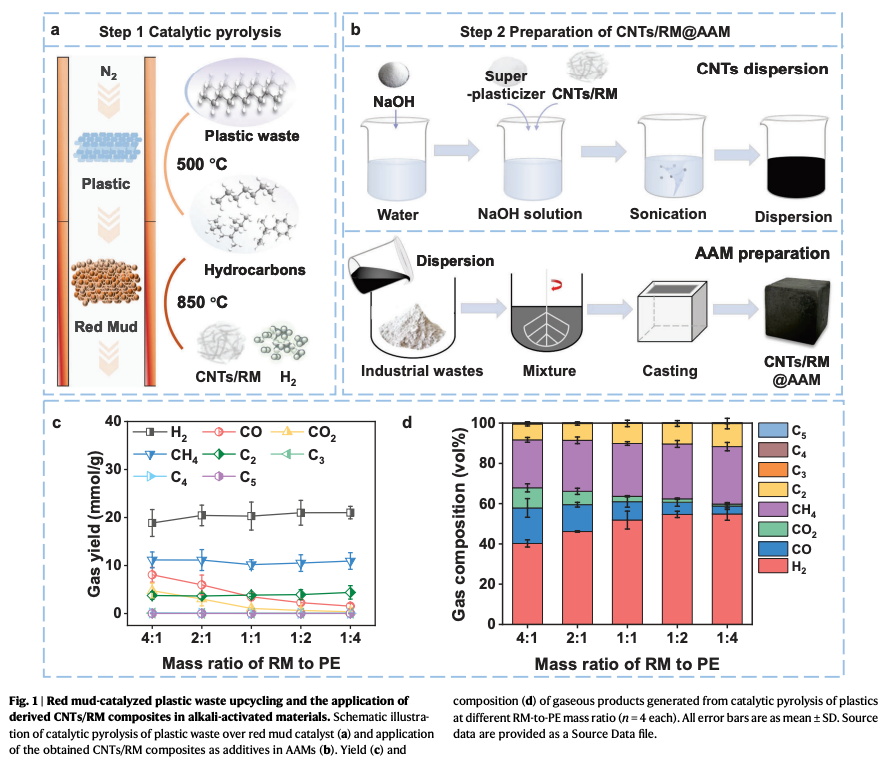
Figure 1 introduces the complete route. Polyethylene is pyrolysed at approximately 500 °C, and the vapours pass through a red-mud catalyst bed at 850 °C. The process generates hydrogen-containing gas and a solid composite of carbon nanotubes supported on red mud. That composite is subsequently incorporated into an alkali-activated binder.
The figure also compares gas yield and composition across different red-mud-to-polyethylene ratios. These measurements establish how the balance between catalyst and feedstock affects gas production. Together with the carbon characterization that follows, they identify a ratio of 1:4 as the selected condition, producing 21.0 mmol H₂ per gram of plastic.
Figure 2 | Following nanotube growth on red mud
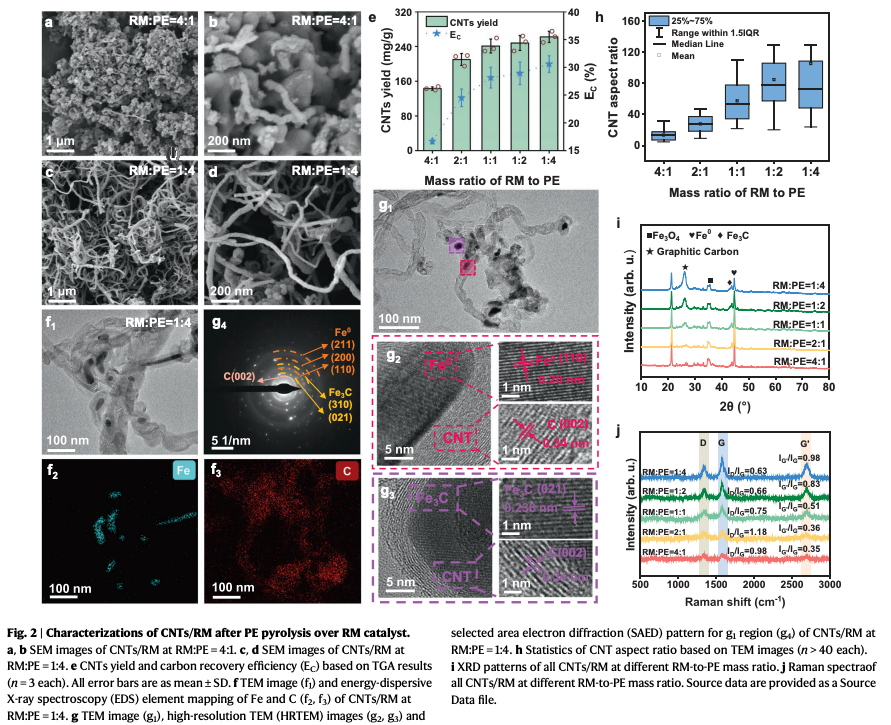
Figure 2 examines the solid products using electron microscopy, thermogravimetric analysis, diffraction and Raman spectroscopy. The images show nanotubes growing around iron-containing particles, while high-resolution imaging and diffraction identify metallic iron and iron carbide associated with nanotube formation.
Changing the red-mud-to-polyethylene ratio alters both carbon yield and nanotube geometry. Increasing the proportion of polyethylene produces longer nanotubes with higher aspect ratios. At the selected 1:4 ratio, the nanotube yield reaches 262 mg per gram of plastic.
Raman measurements also indicate more ordered carbon at this ratio. The figure therefore connects the preparation conditions with the quantity, shape and structural order of the reinforcement subsequently introduced into the binder.
Figure 3 | Comparing feedstocks and red-mud sources
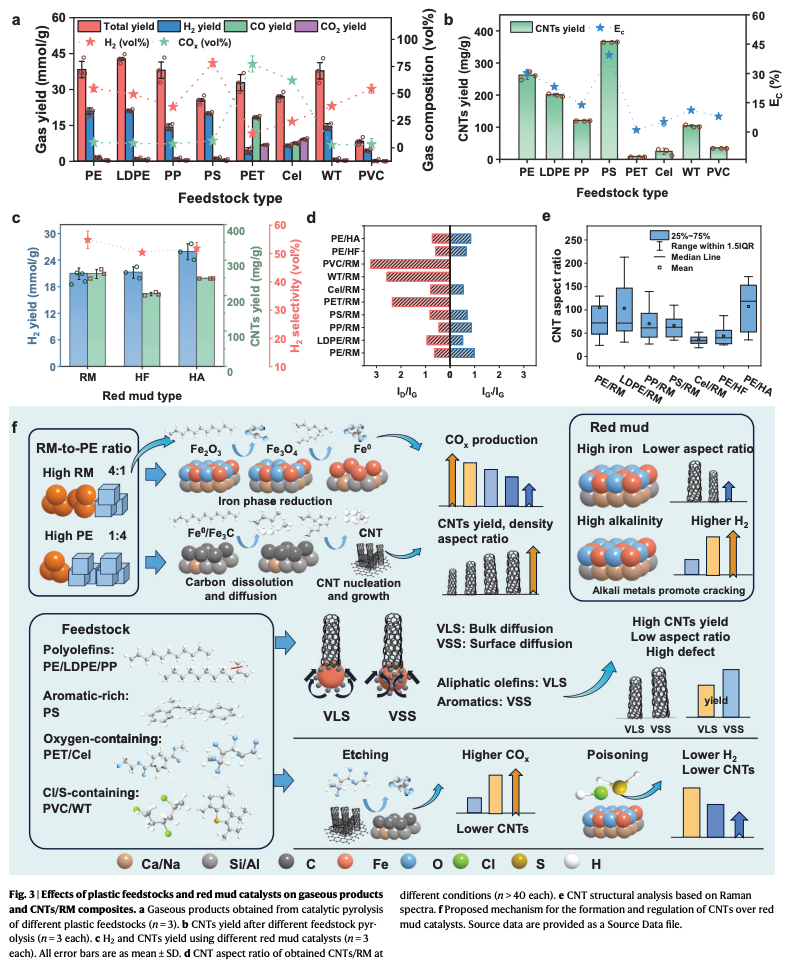
Figure 3 extends the process beyond the initial polyethylene experiment. It compares gas production, nanotube yield and nanotube structure across different feedstocks and red-mud catalysts.
Polyethylene and low-density polyethylene produce approximately 21.0 and 21.2 mmol H₂ per gram of feedstock, respectively. Polypropylene produces less hydrogen and more methane. Polystyrene gives the highest nanotube yield, at 367 mg per gram, but its nanotubes have more defects and lower aspect ratios. Oxygen-rich feedstocks produce less nanotube carbon.
The figure also examines variation among red-mud sources. Differences in iron content and matrix basicity affect nanotube nucleation, growth and defect formation. The proposed mechanism brings these observations together: plastic-derived vapours reduce iron oxides, and the resulting iron-containing particles support carbon deposition and nanotube growth.
Figure 4 | Measuring strength, pore structure and durability
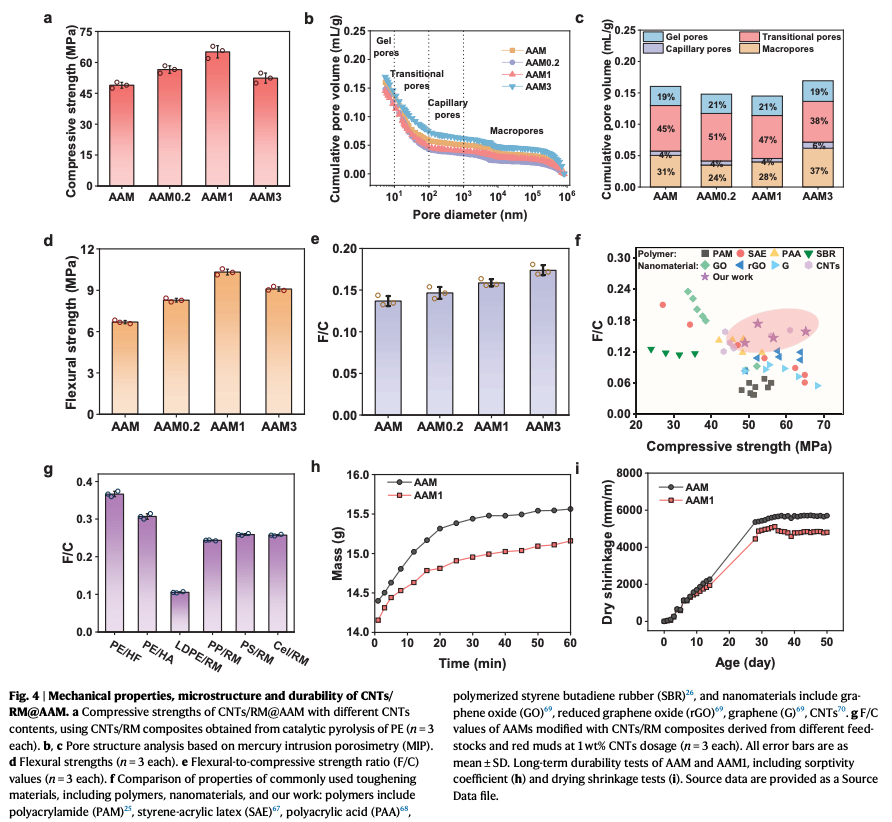
Figure 4 tests how the composite changes the construction material. The dosage is expressed by its carbon-nanotube content, rather than by the total mass of the nanotube/red-mud composite.
At 1 wt% CNT dosage, compressive strength increases by 33.1% and flexural strength by 54.3%. The flexural-to-compressive strength ratio rises by 16.4%. Pore measurements accompany these tests, linking the mechanical response to changes in the internal structure.
The figure also compares composites obtained from different feedstocks and red-mud sources, alongside other reinforcement materials. Water-absorption and drying-shrinkage measurements show lower sorptivity and shrinkage for the selected reinforced formulation than for the unmodified binder. Higher nanotube dosage does not produce a continuous improvement, prompting closer examination of the reaction products and nanotube dispersion.
Figure 5 | Examining changes in the binding gel
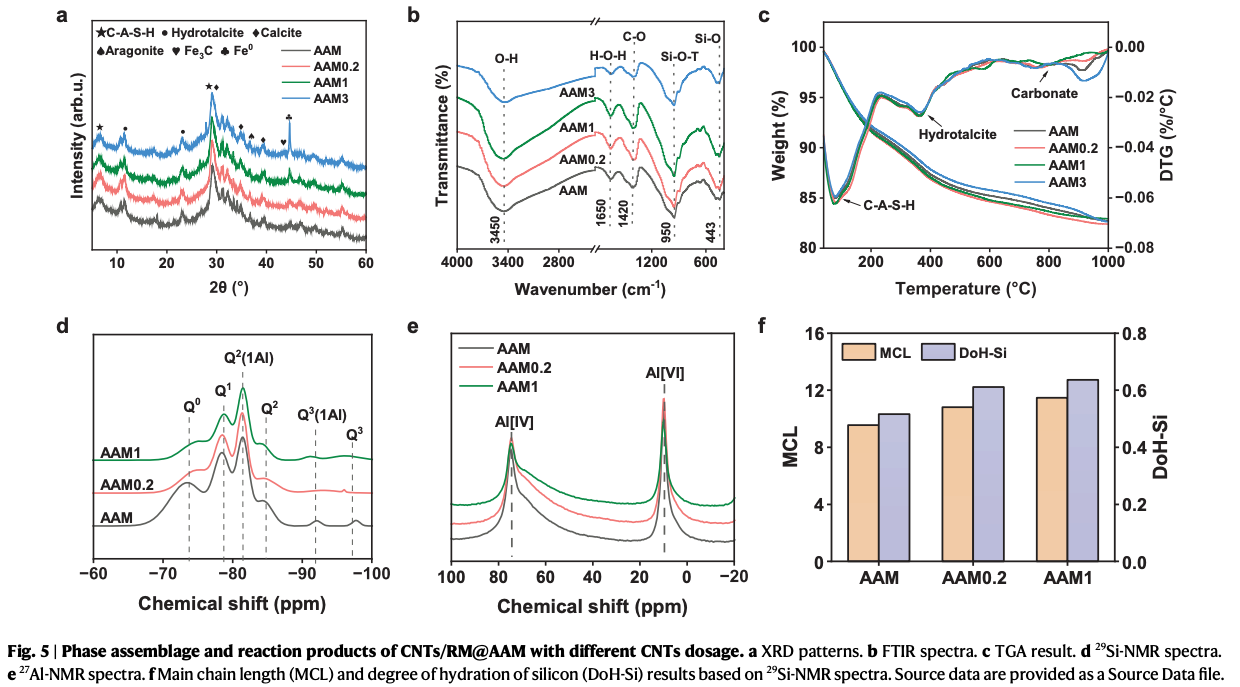
Figure 5 uses X-ray diffraction, infrared spectroscopy, thermogravimetric analysis and solid-state nuclear magnetic resonance to examine the binder’s phases and reaction products.
The results indicate that a moderate nanotube dosage promotes formation and polymerization of the aluminosilicate binding gel. The reported mean chain length increases from 9.56 to 11.48, connecting the reinforcement addition with changes in the gel network.
At higher dosage, this effect weakens. The authors relate the trend to nanotube aggregation, which reduces the benefit of adding more composite. The figure shows that the mechanical response involves changes in binder chemistry as well as physical reinforcement.
Figure 6 | Showing how nanotubes reinforce the matrix
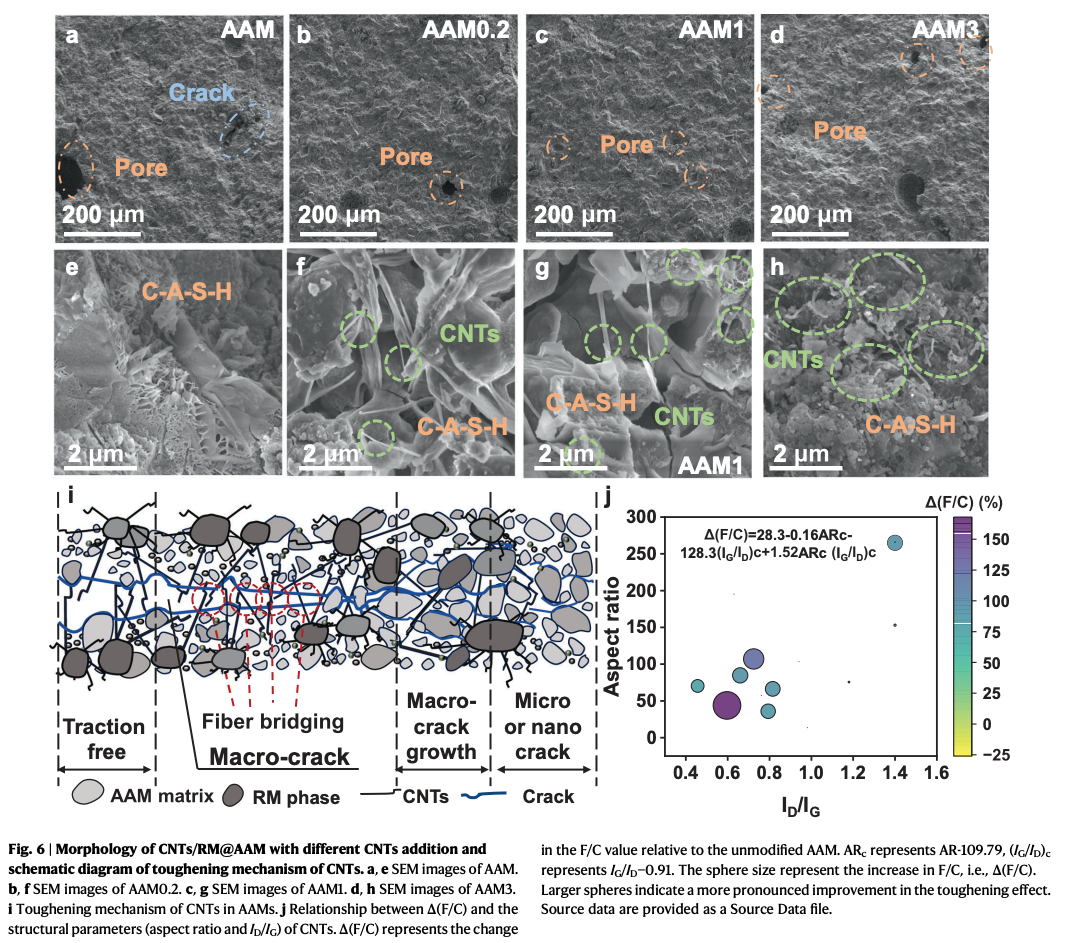
Figure 6 compares the microstructure of the unmodified binder with formulations containing increasing nanotube dosages. The unmodified material contains pores and microcracks. At a suitable dosage, the reinforced material has a more refined pore structure, with nanotubes connecting regions of the matrix.
The authors organize the reinforcement mechanism into three contributions. Nanotubes fill spaces within the binder, provide surfaces for reaction-product nucleation, and bridge cracks to limit their propagation. Excessive addition produces aggregation and a less uniform structure.
The figure also relates the change in the flexural-to-compressive strength ratio to nanotube aspect ratio and Raman-derived structural parameters. This comparison connects the nanotube characteristics established earlier with their performance in the construction material.
Figure 7 | Comparing energy demand, emissions and cost
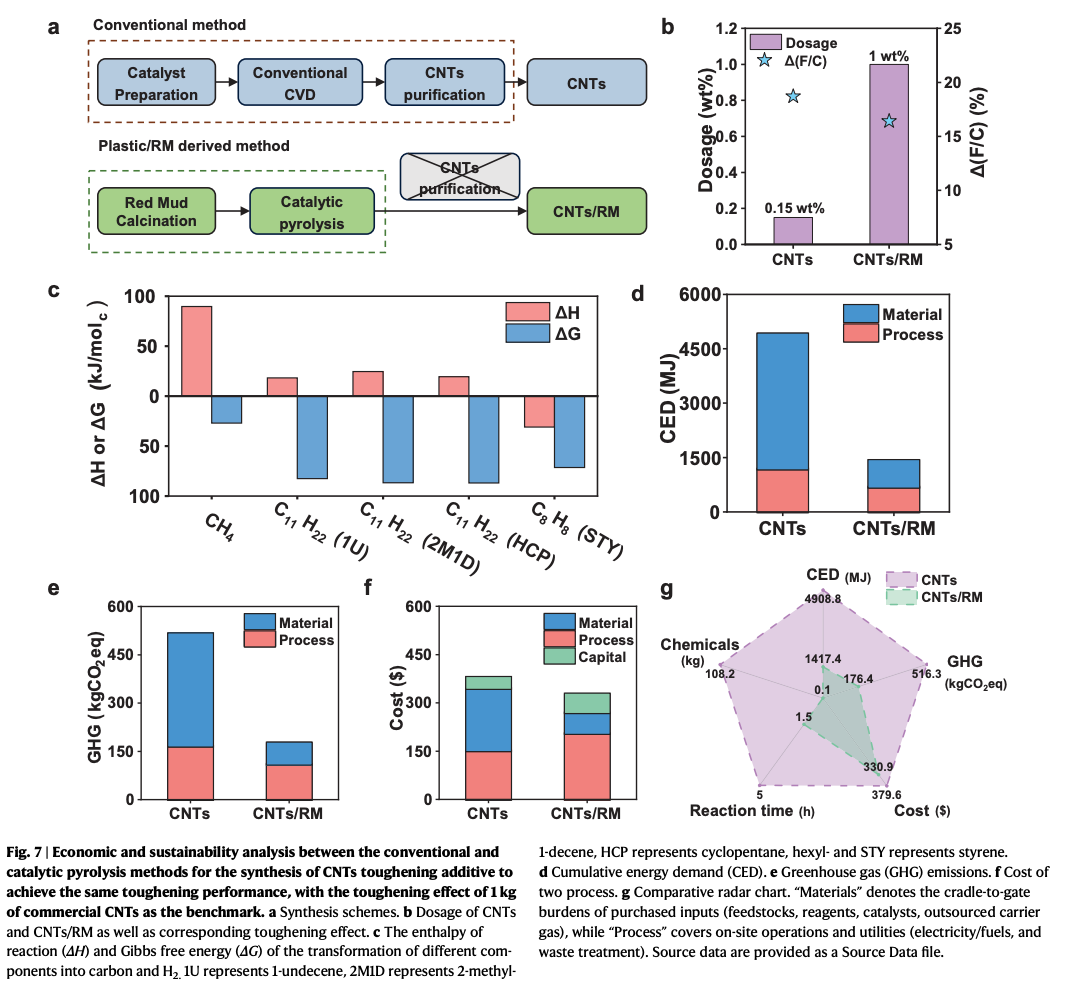
Figure 7 evaluates the composite-production route against conventional carbon-nanotube production. The comparison uses equivalent reinforcement performance: 7.8 kg of the nanotube/red-mud composite is treated as providing the toughening function of 1 kg of commercial nanotubes.
The analysis includes production schemes, reaction thermodynamics, cumulative energy demand, greenhouse-gas emissions and cost. On the defined functional basis, cumulative energy demand decreases from 4,908.8 to 1,417.4 MJ, and greenhouse-gas emissions fall from 516.3 to 176.4 kg CO₂-equivalent. Estimated cost decreases from US$379.6 to US$327.9.
These results correspond to reductions of approximately 71.1% in energy demand, 65.8% in greenhouse-gas emissions and 13.6% in cost under the assessment’s assumptions. The comparison accounts for the larger quantity of composite needed to achieve equivalent reinforcement.
Takeaways and outlook
The study follows red mud through three connected roles: catalysing plastic-derived vapour conversion, supporting carbon nanotube growth and remaining in the composite used to reinforce an alkali-activated binder.
The experiments connect hydrogen and nanotube production with changes in gel structure, pore filling and crack bridging. At the selected composite loading, both compressive and flexural strength improve. The authors’ functional-equivalence assessment also reports lower energy demand, greenhouse-gas emissions and cost than commercial nanotube reinforcement under the compared conditions.
About the researchers
Mingyue Yan of Zhejiang University is the first author. Chen Sun and Bin Yang, both of Zhejiang University, are the corresponding authors.
The other authors are Huiyang Bi, Yifan Lu, Zhichun Huang, Zhongjian Li, Yang Hou and Lecheng Lei. The listed affiliations include Zhejiang University, the Institute of Zhejiang University-Quzhou and the Zhejiang University Hydrogen Energy Institute.
Original research
Mingyue Yan; Huiyang Bi; Yifan Lu; Zhichun Huang; Chen Sun; Zhongjian Li; Yang Hou; Lecheng Lei; Bin Yang. “Toughening alkali-activated construction materials using nanocarbon composites from red mud-catalyzed plastic waste upcycling.” Nature Communications. Published online 31 October 2026.
Research POP Notes
This article reflects the independent interpretation of the Research POP team and does not represent the views of the authors, their institutions or the journal. If you identify any inaccuracies or have concerns regarding the content, figures or attribution, please contact us at team.researchpop@gmail.com. We will review the matter promptly and make corrections or remove the relevant material where appropriate.